By Joseph Adama
Nigeria’s First Lady, Senator Oluremi Tinubu, has expressed strong appreciation for Governor Ahmed Usman Ododo’s leadership in delivering a world-class National Community Food Bank facility in Lokoja, describing the project as a significant milestone in the fight against food insecurity and malnutrition in the North-Central zone.
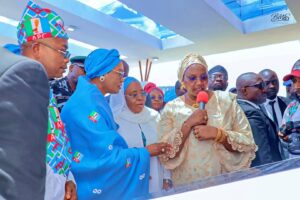
During her working visit to Kogi State, where she inspected the facility as part of the zonal rollout of the National Community Food Bank programme, Senator Tinubu praised the state government’s commitment to infrastructure that directly supports vulnerable populations, particularly women and children.
“The establishment of this first-class National Community Food Bank in Lokoja under the visionary leadership of Governor Ahmed Usman Ododo is a testament to purposeful governance,” the First Lady noted. “This facility will serve as a critical hub for distributing nutritious food, empowering communities, and aligning with the Renewed Hope Agenda of President Bola Ahmed Tinubu to tackle hunger and improve health outcomes across Nigeria.”
Senator Oluremi Tinubu praised the dedication of Kogi State in advancing the initiative, urging sustained collaboration to make nutritious food accessible at the community level. She reiterated the programme’s goal of targeting children under six, pregnant and lactating mothers, while building resilient local food systems.
In his speech, Governor Ahmed Usman Ododo warmly welcomed Senator Oluremi Tinubu to Kogi State and expressed profound gratitude to the Federal Government for its strategic partnership and support in actualizing the food bank project.
“Your Excellency, Senator Oluremi Tinubu, we are deeply honoured by your presence and commitment to the well-being of our people,” Governor Ododo said. “This National Community Food Bank would not have reached this standard without the enabling policies, resources, and collaboration from the Federal Government under President Bola Ahmed Tinubu.
” We appreciate the Renewed Hope Initiative and the First Lady’s personal dedication to nutrition, women empowerment, and grassroots development. Kogi State remains a willing and ready partner in national efforts to build a food-secure Nigeria.”
Governor Ododo commended the Commissioner for Health, Dr. Abdulazeez Adams Adeiza, for his unwavering commitment to the health sector.
“Dr. Abdulazeez Adams Adeiza has demonstrated exceptional dedication and professionalism in advancing healthcare delivery across Kogi State,” the Governor stated. “His leadership has strengthened systems that complement initiatives like the Food Bank by ensuring better nutrition and primary healthcare access for our citizens.”
Furthermore, the Governor appreciated the Executive Director of the Kogi State Primary Health Care Development Agency, Dr. Muazu Omeiza Musa, for his relentless efforts in driving quality outcomes.
“Under the able leadership of Dr. Muazu Omeiza Musa, the Primary Health Care Development Agency has shown dogged determination and excellence, especially in aligning with our administration’s priorities.
His commitment has been instrumental in ensuring that projects like this Food Bank translate into real, measurable improvements in the lives of Kogites,”
The Kogi State Commissioner for Health, Dr. Abdulazeez Adams Adeiza, underscores the federal and state governments’ commitment to enhancing food security, particularly for vulnerable populations including pregnant women, nursing mothers, and children under six.
He highlighted the programme’s alignment with broader health initiatives aimed at reducing child mortality linked to malnutrition and assured residents of transparent distribution systems to ensure the programme’s impact reaches grassroots levels effectively.
The Executive Director of the Kogi State Primary HealthCare Development Agency, Dr. Muazu Omeiza Musa, expressed profound appreciation to Senator Oluremi Tinubu for her pivotal role in flagging off the National Community Food Bank initiative in Lokoja.
Dr. Muazu Omeiza Musa described the visit as a significant boost to the state’s health and humanitarian efforts, noting that the Food Bank will directly support vulnerable populations by ensuring access to nutritious meals, which aligns seamlessly with the Agency’s mandate to promote primary healthcare and nutritional well-being across communities.
Dr. Muazu Omeiza Musa also appreciated Governor Ahmed Usman Ododo for creating a conducive environment that enables the Kogi State Primary HealthCare Development Agency to thrive and execute transformative programs like the Food Bank initiative.
The Executive Director credited the Governor’s leadership and unwavering support for fostering policy alignment, resource mobilization, and inter-agency synergy, which have been instrumental in driving healthcare advancements in the state and reaffirmed the Agency’s commitment to leveraging such opportunities for the overall development and prosperity of Kogi State’s residents.
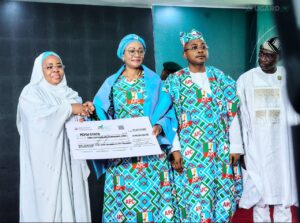
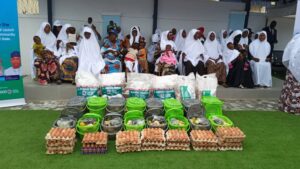
In a heartwarming display of gratitude, a beneficiary, Mrs. Naima Ahmed, publicly showered praise on the government for its timely intervention and distribution of essential gifts aimed at improving maternal and child health.
Mrs. Naima Ahmed who spoke to journalists shortly after receiving her package said , “This government has shown that government truly care for the common people,” she said. “Before now, accessing basic healthcare items was a big struggle for families like mine. Today, I received everything my children and I need to stay healthy. I am grateful to the Governor and the entire team at the State Primary Healthcare Department Agency for remembering us in the grassroots.”
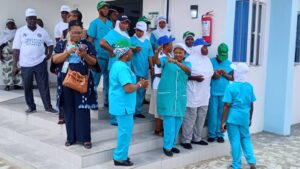
The high-level visit included commissions of key projects and interactions with beneficiaries, highlighting the Tinubu administration’s focus on human capital development. Officials noted that the food bank would significantly reduce hunger-related health challenges, fostering hope and stability across the North Central region.
The National Community Food Bank project forms part of a broader national programme aimed at bridging gaps in food surplus and need, supporting vulnerable households, and reducing malnutrition, particularly among children under six.