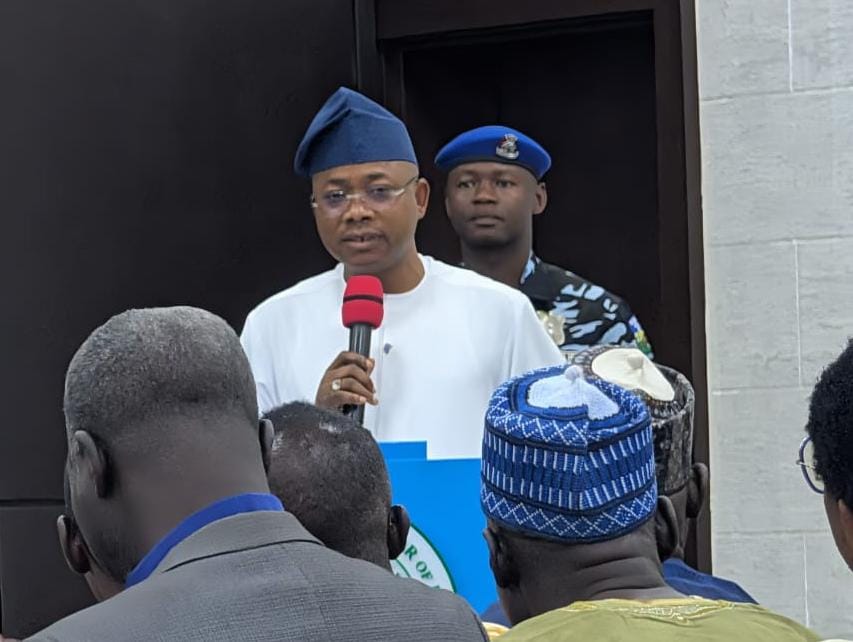
Ododo’s Quiet Revolution: How Kogi Governor is Rewriting The Story of Primary Healthcare

From Government House to the grassroots: Over 80 PHCs revitalised as Ododo takes healthcare to the doorsteps of ordinary Kogites By Joseph Adama PRO, KSPHCDA   There is a revolution taking place in Kogi State. It is not being fought with placards. It is not unfolding on the campaign trail. It is not accompanied by political drums or endless ceremonies. It is happening quietly—in rural communities, in Primary Healthcare Centres, in maternity rooms, consultation rooms and immunisation points where ordinary Kogites meet government face-to-face. And at the centre of this unfolding story is Governor Ahmed Usman Ododo. While political attention is often consumed by roads, contracts, appointments and the next election, the Ododo administration appears to be making a different calculation: that one of the most powerful ways government can change lives is by bringing healthcare directly to the people. That calculation is now beginning to show results. More than 80 Primary Healthcare Centres have reportedly been revitalised across Kogi State, with interventions extending beyond mere renovation to include staff accommodation, water facilities, solar power and security arrangements. This is not just construction. It is an attempt to rebuild the connection between government and the people. Because for the poor farmer in a remote village, government is not an abstract policy document. Government is the health worker who attends to his sick child. For the pregnant woman, government is not a political speech. Government is the midwife who is available when labour begins. For the elderly man who cannot afford …


From Government House to the grassroots: Over 80 PHCs revitalised as Ododo takes healthcare to the doorsteps of ordinary Kogites

By Joseph Adama
PRO, KSPHCDA


There is a revolution taking place in Kogi State.

It is not being fought with placards.
It is not unfolding on the campaign trail.
It is not accompanied by political drums or endless ceremonies.

It is happening quietly—in rural communities, in Primary Healthcare Centres, in maternity rooms, consultation rooms and immunisation points where ordinary Kogites meet government face-to-face.

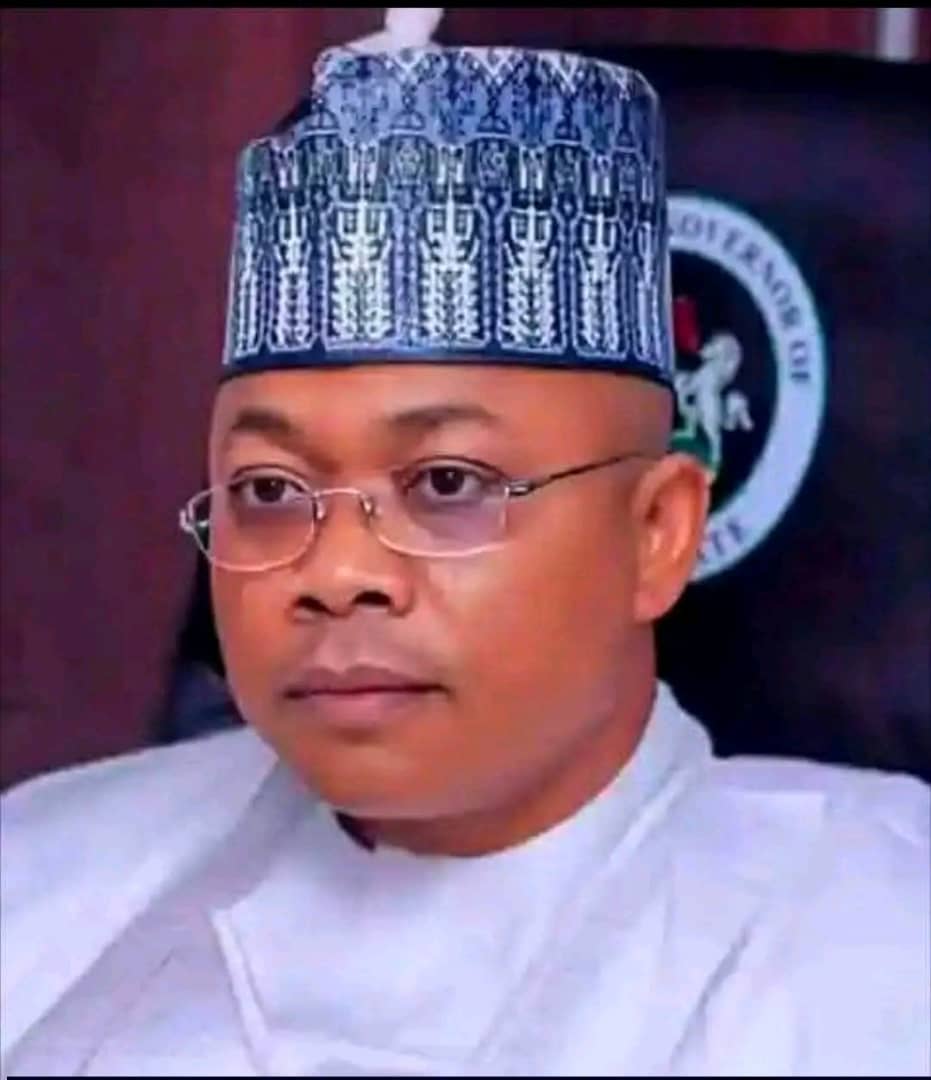
And at the centre of this unfolding story is Governor Ahmed Usman Ododo.

While political attention is often consumed by roads, contracts, appointments and the next election, the Ododo administration appears to be making a different calculation: that one of the most powerful ways government can change lives is by bringing healthcare directly to the people.

That calculation is now beginning to show results.

More than 80 Primary Healthcare Centres have reportedly been revitalised across Kogi State, with interventions extending beyond mere renovation to include staff accommodation, water facilities, solar power and security arrangements.

This is not just construction.

It is an attempt to rebuild the connection between government and the people.

Because for the poor farmer in a remote village, government is not an abstract policy document.

Government is the health worker who attends to his sick child.

For the pregnant woman, government is not a political speech.

Government is the midwife who is available when labour begins.

For the elderly man who cannot afford expensive transportation to a distant hospital, government is the health facility within reach.

That is why what is happening in Kogi’s Primary Healthcare sector deserves a much bigger conversation.

THE POLITICS OF BEING PRESENT

There is a powerful political lesson hidden inside the healthcare intervention.

Government earns legitimacy when people can feel its presence.

For years, one of the greatest weaknesses of public administration in Nigeria has been the distance between government and the grassroots.

Budgets are approved in capitals.

Policies are written in offices.

Projects are announced at ceremonies.

But the ordinary citizen often remains several kilometres away from the actual benefits of government.

Governor Ododo’s PHC strategy appears designed to challenge that pattern.

Instead of concentrating healthcare around major urban centres, the administration is strengthening the frontline facilities where ordinary citizens actually live.

That is governance at its most basic—and perhaps its most meaningful.

A woman in a rural community should not need to travel to Lokoja before government becomes relevant to her pregnancy.

A child should not need to travel several kilometres before accessing basic healthcare.

A family should not be forced to sell valuable possessions simply to transport a sick relative to a distant hospital.

Healthcare should meet the citizen where the citizen lives.

And that is precisely where Primary Healthcare becomes a political and social game changer.

MORE THAN BUILDINGS

The easiest thing for any government to do is to commission a building.

The harder task is making that building work.

That distinction is important.

A newly painted health centre may look impressive from the outside. But if there is no doctor, nurse, midwife, electricity, water, equipment or security, the building quickly becomes another abandoned symbol of government promises.

The Kogi model appears to recognise this fundamental problem.

The reported revitalisation of more than 80 PHCs, coupled with provisions such as staff quarters, water, solar power and security, suggests an attempt to address some of the practical conditions required for continuous service delivery.

A PHC must not merely exist. It must function.

That is the difference between infrastructure and healthcare.

And this is where the Kogi State Primary Health Care Development Agency assumes enormous importance.

THE MAN BEHIND THE GRASSROOTS PUSH

At the operational centre of this agenda is the Executive Director of the Kogi State Primary Health Care Development Agency, Dr. Muazu Omeiza Musa.

The agency has increasingly become one of the critical mechanisms through which the administration’s healthcare policies are translated into interventions at community level.

The challenge is enormous.

Kogi has 21 Local Government Areas, numerous rural settlements and communities separated by difficult terrain and long distances.

Taking healthcare to such communities requires more than political declarations.

It requires planning.

It requires manpower.

It requires logistics.

It requires community engagement.

It requires maintenance.

And above all, it requires continuity.

The real test, therefore, is not how many PHCs are commissioned.

The real test is how many remain functional years after the cameras have disappeared.

That is where the KSPHCDA—and the leadership of Dr. Muazu Omeiza Musa—will face its biggest responsibility.

WHEN A HEALTH CENTRE BECOMES GOVERNMENT

There is perhaps no better place to measure the performance of government than inside a Primary Healthcare Centre.

In the corridors of government offices, policies can look perfect.

In a PHC, reality cannot be hidden.

A pregnant woman does not care about political slogans.

She wants a skilled health worker.

A mother with a sick child does not care about government publicity.

She wants treatment.

A community does not measure healthcare in speeches.

It measures it in availability, affordability, accessibility and quality.

This is why the Ododo administration’s healthcare intervention could become politically significant in ways that extend far beyond the health sector.

When citizens begin to encounter functioning government services at their doorstep, the relationship between government and the governed changes.

Government stops being something they hear about.

Government becomes something they experience.

THE ODODO LEGACY QUESTION

Governor Ododo will eventually be judged by history.

Not by today’s applause.

Not by political arguments on social media.

Not by newspaper headlines alone.

History will ask what changed in the lives of ordinary Kogites during his tenure.

Did healthcare move closer to the people?

Did women have better access to maternal services?

Did children receive essential interventions closer to home?

Did rural communities gain stronger access to Primary Healthcare?

Were frontline health workers better supported?

Did government investment survive beyond commissioning ceremonies?

Those are the questions that matter.

And if the current PHC revitalisation programme is properly sustained, it could become one of the most consequential components of the Ododo administration’s legacy.

THE COMMUNITY MUST OWN THE REVOLUTION

But there is another side to this story.

Government cannot do it alone.

A healthcare facility belongs to the community as much as it belongs to the government.

Communities must protect the facilities.

Health workers must treat patients with professionalism and compassion.

Equipment must be maintained.

Solar installations and water facilities must be protected.

Citizens must use the facilities.

Traditional rulers, religious leaders, youth organisations and community associations must become partners in sustaining the investment.

The success of the PHC revolution will ultimately depend on whether Kogi can move from government ownership to community ownership.

THE BIGGER PICTURE

There is a temptation to view the revitalisation of PHCs simply as another government project.

That would be a mistake.

Primary Healthcare sits at the foundation of the entire health system.

When it works, pressure on secondary and tertiary hospitals can be reduced.

When it fails, minor illnesses can become emergencies.

When maternal services are available closer to communities, vulnerable women have a better chance of receiving timely care.

When immunisation and preventive services reach rural communities, government is not merely treating disease—it is preventing it.

That is why investment in Primary Healthcare is not an ordinary government expenditure.

It is an investment in the survival, productivity and future of the state.

THE ROAD AHEAD

Yet the biggest question is no longer whether something is happening.

The bigger question is whether the momentum can be sustained.

Can Kogi keep the revitalised facilities functional?

Can it maintain adequate staffing?

Can essential medicines and supplies remain available?

Can equipment be maintained?

Can communities remain engaged?

Can the state continue investing in frontline healthcare?

Can the PHCs become dependable first points of care rather than impressive structures that gradually deteriorate?

Those questions will determine whether the present intervention becomes a temporary government programme—or a genuine healthcare revolution.

Because the difference between a project and a legacy is sustainability.

THE VERDICT WILL COME FROM THE GRASSROOTS

Governor Ahmed Usman Ododo may have many achievements that will compete for attention when the history of his administration is eventually written.

But one of the most important chapters may not come from the grandest government building or the loudest political event.

It may come from a small Primary Healthcare Centre somewhere in rural Kogi.

A centre where a mother walks in and receives care.

Where a child receives vaccination.

Where a community health worker is available.

Where electricity works.

Where water flows.

Where essential services are accessible.

Where citizens can look at the facility and say:

“This government remembers us.”

That is the real power of Primary Healthcare.

And that is why Kogi’s emerging healthcare story deserves attention.

Governor Ododo’s most important political achievement may ultimately be measured not by how loudly government speaks, but by how closely government lives among its people.

The quiet revolution is happening.

The facilities are emerging.

The infrastructure is being strengthened.

The grassroots are beginning to feel the presence of government.

And if the vision is sustained, Kogi may eventually look back at the Ododo years and realise that one of the administration’s most enduring achievements was not simply building healthcare centres.

It was bringing government home.

It was taking healthcare to the doorstep.

It was putting the ordinary Kogite back at the centre of governance.

And perhaps, in the final analysis, that is what leadership is supposed to be about.

Kogi State Government

Kogi State Government

Related Posts

Leave a Reply

Your email address will not be published. Required fields are marked *