Factory-to-Pharmacy Checks Strengthen Safety, Quality, Affordability and Reliability of Medicines
By Rotimi Odofin
The Kogi State Drugs and Medical Supplies Management Agency (KSDMSMA) has taken its campaign for quality medicines several steps further, moving beyond government warehouses, pharmacies and health facilities to the very point where medicines are manufactured.
Between May and August 2026, the Executive Secretary of KSDMSMA, Pharm. Ibrahim Onize Salamat, joined other Heads of Drugs Management Agencies on inspection visits to pharmaceutical manufacturing plants across Nigeria.
The exercise, which formed part of the Agency’s 2026 Annual Operational Plan, was facilitated by the Kogi State Government in collaboration with the African Resource Centre of Excellence in Supply Chain Management (ARC-ESM).

The objective was clear: to know exactly where medicines and medical consumables entering Kogi State originate, how they are produced, the standards guiding their production, their cost, and how reliably manufacturers can deliver them.
Rather than relying solely on paperwork and assurances from suppliers, the Agency physically visited production facilities to examine manufacturing processes, quality-control mechanisms, storage systems, production capacity and supply timelines.
The exercise also provided an opportunity to strengthen direct relationships with manufacturers and identify practical ways of improving the availability of essential medicines across government-ownd health facilities.

Sagar Vitaceuticals: Going Inside the Production Line
At Sagar Vitaceuticals Nigeria Limited, Makun Factory, Ogun State, the Kogi team inspected a multi-dosage pharmaceutical manufacturing facility producing tablets, capsules, syrups, suspensions, creams, ointments and sachet powders.
Particular attention was paid to contamination-control measures, including zonal segregation, differential pressure systems and dedicated airlocks designed to protect the integrity of pharmaceutical products.
The inspection also covered the plant’s three-stage warehousing arrangement comprising Quarantine, Sampling and Approved Areas, ensuring that products are properly controlled at different stages before they enter the supply chain.
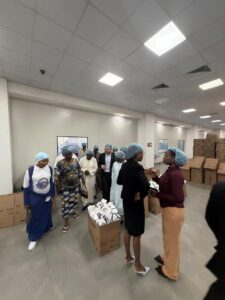
Inside the Oral Solid Dosage section, the team examined equipment including Rapid Mixer Granulators, Fluid Bed Dryers, high-speed rotary tablet presses, coating pans and blister-packaging lines equipped with camera inspection and Alu-Alu systems.
The liquid production section operates automated washing, filling and capping lines, while the cream and ointment section features an automated tube-filling line.
Following the inspection, the management of Sagar Vitaceuticals pledged to deepen its relationship with Kogi State and give priority to products required by the Agency.
Afri Medical Pharmaceutical: Checking What Goes Into the Hospitals
The inspection team also visited Afri Medical Pharmaceutical in Lagos, where the focus shifted to medical consumables — particularly needles and syringes that are indispensable to hospitals, immunisation programmes and other health interventions.
The team examined production processes and quality-control systems to ascertain compliance with required safety and sterility standards.
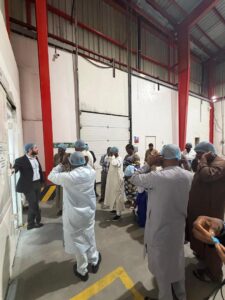
For KSDMSMA, the exercise was important because the quality of medicines cannot be separated from the quality of the consumables used to administer them.
Fidson PLC: Tackling the Problem of Delayed Supplies
At Fidson PLC in Lagos, the Agency’s engagement focused largely on strengthening an existing partnership and addressing one of the persistent challenges in pharmaceutical supply management — lead time.
Lead time refers to the period between placing an order and receiving the products.
Discussions between KSDMSMA and the company’s management centred on practical measures to reduce delivery delays and ensure that essential medicines ordered for Kogi’s government-owned health facilities arrive when needed.

The emphasis was on moving from a procurement system that merely places orders to one that prioritises predictability, availability and continuity of supply.
Why Factory Inspection Matters
For KSDMSMA, the significance of the exercise goes beyond simply touring pharmaceutical factories.
By physically inspecting manufacturing plants, laboratories and warehouses, the Agency has gained first-hand knowledge of manufacturers’ production capacities, quality-control systems, costs and delivery timelines.
The information gathered is expected to strengthen procurement decisions and planning under the State Drug Revolving Fund.
It will also help the Agency make better-informed decisions on which manufacturers can reliably meet the State’s requirements while ensuring that medicines purchased with public funds meet the necessary standards.
Ultimately, the objective is to ensure that medicines supplied to Kogi’s public health facilities are safe, effective, affordable and available when patients need them.
A Supply Chain Built Around the Patient
The Executive Secretary, Pharm. Ibrahim Onize Salamat, expressed appreciation to Kogi State Governor, Alhaji Ahmed Usman Ododo, for supporting reforms aimed at strengthening the State’s pharmaceutical supply system.

She also acknowledged the commitment of the Coordinating Commissioner for Health, Dr. Abdulazeez Adams Adeiza, as well as the support of ARC-ESM and the management of Sagar Vitaceuticals, Afri Medical Pharmaceutical and Fidson PLC.
According to her, the factory inspections are not intended to be a one-off exercise.
«“By taking quality assurance to the point of production, we know where our medicines come from, how they are made, the standards that govern them, and how reliably manufacturers can supply.”»
That approach represents a significant shift in the way pharmaceutical quality assurance is being approached in the State.
Instead of waiting until medicines arrive at warehouses or health facilities before asking questions about their quality, Kogi is taking the questions upstream — to the factory floor.
And the message from the Agency is unmistakable:
Quality starts at the factory. Accountability must run through the entire supply chain. And at the end of it all, the patient must remain the ultimate beneficiary.