By Blessing Ameloko-Odoh
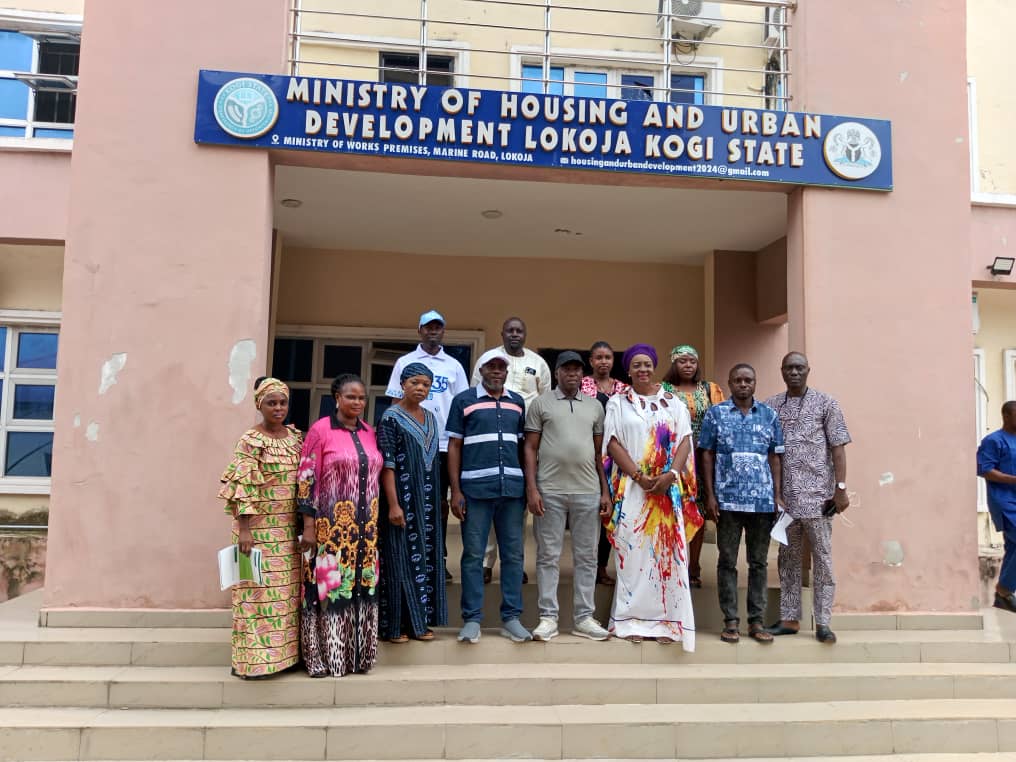
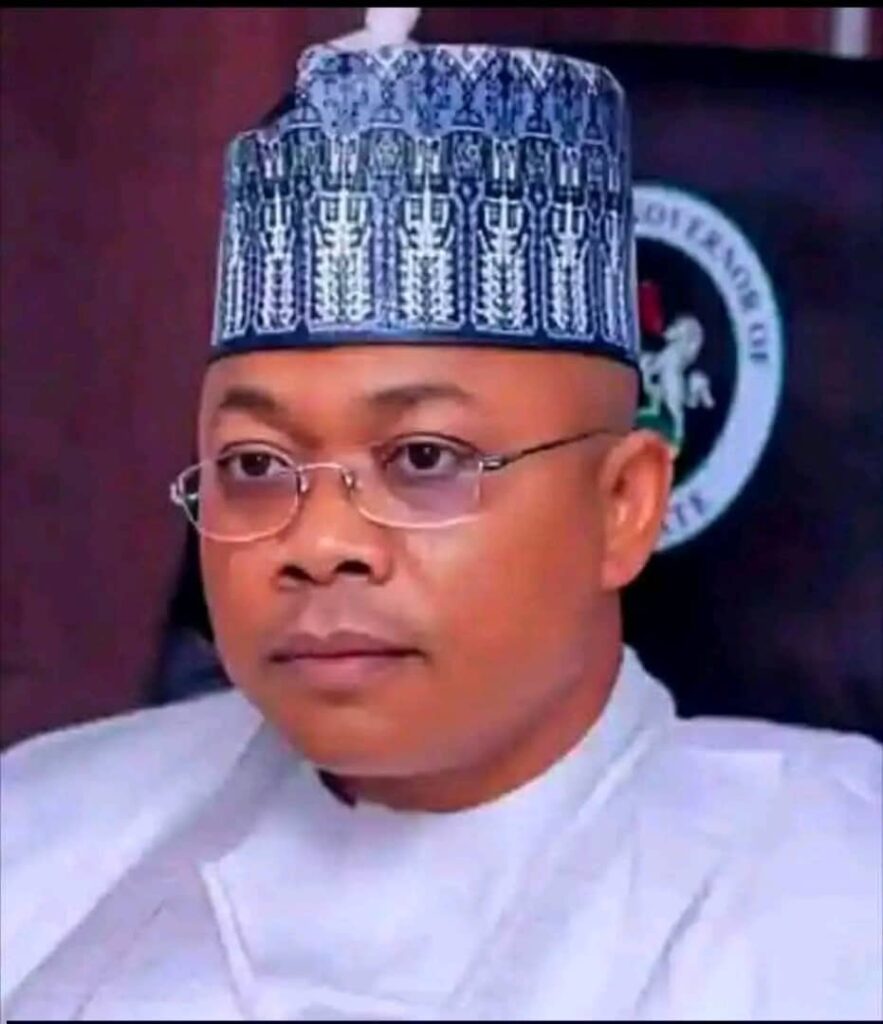
The Kogi State Commissioner for Housing and Urban Development, Hon. Abanika Taiye, has pledged his support for the flood-related demands of Ganaja Community, describing a recent advocacy initiative by the Challenged Parenthood Initiative (CPI) as a commendable example of citizen-driven engagement with government.
Abanika made the commitment during an advocacy visit by CPI, a Lokoja-based non-governmental organisation focused on good governance, justice, and the rights of women, girls and vulnerable communities.
The engagement was organised under the Ganaja Charter of Demand Project, a community-driven initiative supported by the Heinrich Böll Stiftung (HBS), aimed at securing government attention to critical developmental challenges confronting the flood-prone community.
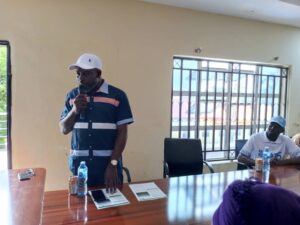
The Commissioner described the initiative as a rare and commendable model of community participation, comparable to practices in advanced societies where citizens identify pressing challenges in their communities and engage government constructively toward finding solutions.
Responding to the five-point demands presented by the delegation, Abanika disclosed that the rehabilitation of Nyama Nyama Road had already been captured in the state budget.
He explained that following a collaboration involving the Deputy Governor and the Ministry of Works in 2024, work commenced on the road, with the design process subsequently handed over to the NewMap project for completion.
On potable water, the Commissioner revealed that Governor Ahmed Usman Ododo had directed all commissioners to facilitate the sinking of at least three boreholes each within their respective local government areas.
He pledged to allocate one of the boreholes under his quota to Ganaja Community, stressing that the precise location would be determined in consultation with stakeholders as the advocacy progresses.
Addressing concerns over flooding and the displacement of residents, Abanika assured the delegation that the proposed Internally Displaced Persons (IDP) camp for Ganaja would be captured in the Ministry’s 2027 budget.
He said the move would provide a proactive funding framework for responding to the recurrent displacement of residents during flooding.
The Commissioner also acknowledged concerns over healthcare access in the community, noting that the existing primary healthcare centre is located far from the areas with the highest concentration of residents.
He pledged to continue advocating for improved healthcare infrastructure, including the possibility of a secondary healthcare facility to better serve the growing population.
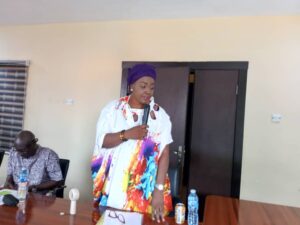
Abanika further disclosed that the state is currently developing a master plan, assuring that the Governor remains committed to the development of Ganaja and other communities across the state.
He, however, called on residents to continue supporting the present administration, particularly as the state approaches the forthcoming elections.
The advocacy visit followed extensive consultations with residents and stakeholders in Ganaja, one of the communities along the River Niger that has suffered repeated flooding over the years.
The recurring floods have destroyed livelihoods, displaced families and disrupted access to roads, healthcare, education, potable water and other essential services.
The five priority demands identified through the community consultations are the provision of potable water, reconstruction of a functional Primary Healthcare Centre, rehabilitation of Nyama Nyama Road as an alternative route, dredging of the River Niger with the construction of additional dams, and establishment of dedicated IDP camps.
According to CPI, the second phase of the engagement is focused on strengthening political ownership of the Charter of Demand by bringing public office holders directly into discussions on how to translate the community’s priorities into concrete government action.
Speaking during the visit, CPI Executive Director, Mrs Eunice Abimbola Agbogun, said the organisation had established thematic groups to drive advocacy around roads, potable water, dredging, IDP camps and primary healthcare.
She explained that each thematic group has its own chairman and secretary to ensure focused engagement and follow-up.
Agbogun noted that CPI’s sustained advocacy had already attracted the attention of several stakeholders, including the Hydro-Electric Power Producing Areas Development Commission (HYPADEC), which is supporting borehole projects in the community.
She stressed that the visibility and involvement of the Housing Commissioner remained important to the success of the advocacy, particularly given the Ministry’s role in urban development and planning.
The CPI executive director also commended Governor Ododo for directing commissioners to facilitate borehole projects across communities.
She disclosed that a separate engagement with the Commissioner for Water Resources had also produced assurances that efforts were underway to revive the Lokoja Greater Water Works.
On the need for an IDP camp, Agbogun highlighted the disruption caused by the current arrangement in which Ganaja’s primary school is routinely converted into a temporary shelter whenever flooding occurs.
She said the practice not only exposes displaced residents to difficulties but also disrupts the education of children who ordinarily use the facility.
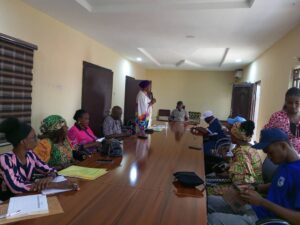
Also speaking, the Chairman of the Ganaja Community Charter of Demand Committee, Hon. Haruna Muhammed, appealed to the Commissioner to help advance the community’s demands and ensure they receive the necessary government attention.
Comrade Mike Abuh, who recalled the devastating 2012 flood that affected Ganaja and several other parts of Kogi State, commended the current administration for what he described as significant interventions in the state.
He appealed to the government to ensure that the outstanding demands of Ganaja Community are captured in the 2027 budget and translated into tangible projects.
The stakeholders expressed optimism that the advocacy would strengthen collaboration between the community and government and ultimately produce lasting solutions to Ganaja’s recurring flood and infrastructure challenges.