_By Princess Funsho Sumanu
_
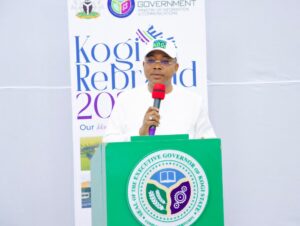
Kogi State is telling a new story, one shaped not by promises alone, but by deliberate action, strategic thinking, and measurable results. With the launch of the Kogi Rebrand 2026, the administration of Governor Ahmed Usman Ododo is redefining governance through a clear commitment to transparency, inclusiveness, and sustainable development.
What is unfolding is not a cosmetic rebranding, but a deep structural transformation anchored on fiscal discipline, economic planning, and people-centered policies designed to secure long-term prosperity.
At the center of this transformation is a government that understands the power of prudent financial management as the backbone of development. By positioning the Ministry of Finance, Budget and Economic Planning as the hub of fiscal coordination, the administration has ensured that Kogi’s finances are not only stable but strategically aligned with its development priorities.
This deliberate alignment has translated into policies that drive growth across key sectors, promote fiscal stability, and create opportunities that reach every corner of the state. Institutions have been strengthened to function more efficiently, governance systems have been refined, and service delivery has improved in ways that directly impact the lives of citizens.
This renewed direction is evident in the state’s approach to revenue generation and economic expansion. Beyond traditional models, the administration has embraced innovation by deploying technology to enhance revenue collection, block leakages, and improve transparency. Internally Generated Revenue has grown through smarter systems and efficient processes, reducing dependence on federal allocations and strengthening fiscal independence.
These efforts are complemented by a strong push for Public-Private Partnerships, opening up new pathways for investment, diversifying the economy, and expanding opportunities for sustainable growth.
Yet, beyond the numbers, the true strength of this administration lies in its commitment to building trust. Transparency and accountability have been elevated from ideals to everyday practice. Budget processes are more open, financial documents are accessible, and citizens are increasingly involved in governance through participatory frameworks that give them a voice in decision-making. Monitoring and evaluation systems have been strengthened, enabling the government to track performance, measure outcomes, and adjust policies where necessary. This data-driven approach ensures that governance is not only responsive but also effective, fostering confidence among citizens and stakeholders alike.
The credibility of the state’s budgeting process has equally undergone a remarkable transformation. By linking expenditure directly to development outcomes, the government has ensured that investments in critical sectors such as healthcare, education, agriculture, and infrastructure yield tangible results. Resources are now allocated with precision, tracked with transparency, and utilized with efficiency, reducing waste and maximizing impact. This has restored public confidence in fiscal governance while laying a solid foundation for sustained socio-economic growth.
Coordination has become a defining feature of governance in Kogi State. Through structures such as the State Economic Council, policies and programmes are harmonized to align with broader development goals while addressing emerging challenges like inflation, unemployment, and shifting economic realities. This proactive and adaptive approach ensures that governance remains responsive to the needs of the people while maintaining a steady focus on long-term growth and stability.
Technology has further amplified the effectiveness of governance, introducing a new era of accountability and performance tracking. The deployment of digital tools such as the KPI Tracking App enables real-time monitoring of projects, helping to identify delays, optimize resource utilization, and ensure timely delivery. Across Ministries, Departments, and Agencies, a KPI-based performance management system has fostered a culture of results, encouraging efficiency, innovation, and healthy competition.
Strengthened Monitoring and Evaluation frameworks now provide actionable insights that continuously improve policy implementation and service delivery.
At the same time, deliberate efforts to improve the ease of doing business have positioned Kogi State as an emerging hub for investment. Regulatory processes have been simplified, digital systems have replaced cumbersome manual procedures, and initiatives such as the distribution of free Corporate Affairs Commission certificates have empowered thousands of entrepreneurs to formalize their businesses.
Land administration has been digitized to enhance transparency and reduce fraud, while trade processes have been streamlined to eliminate bottlenecks and improve efficiency. These reforms have not only boosted investor confidence but have also created a more enabling environment for businesses to thrive.
The ripple effects of these policies are visible in the growth of local enterprises and the strengthening of the SME ecosystem. Hundreds of small businesses have benefited from targeted support, capacity-building programmes, and access to resources, fostering a culture of entrepreneurship and innovation. This has led to increased economic activity, job creation, and improved livelihoods across communities, reinforcing the role of small businesses as key drivers of economic expansion.
Inclusiveness remains at the heart of this transformation. The administration has placed strong emphasis on ensuring that no group is left behind, with targeted programmes designed to empower women, youth, and vulnerable populations. Through access to finance, digital skills, and economic opportunities, these groups are playing a more active role in shaping the state’s economy. Social safety nets have been strengthened, inequality has been reduced, and once underserved communities are now better integrated into the state’s development agenda.
In the agricultural sector, strategic investments have revitalized productivity and strengthened value chains. With significant funding directed toward agro-inputs, processing, and infrastructure, farmers are better equipped to increase output and profitability. Initiatives such as the Special Agro-Processing Zones have boosted industrial activity within agriculture, reduced food inflation, and enhanced food security, while attracting private sector participation and driving rural development.
Digital innovation is also reshaping the state’s economic landscape. Expanded network infrastructure, reduced costs of digital access, and the promotion of technology hubs are creating new opportunities for innovation and collaboration.
These efforts are complemented by the advancement of e-governance systems, which are improving operational efficiency, enhancing transparency, and delivering public services more effectively. Together, they are positioning Kogi State as a forward-looking economy that embraces technology as a catalyst for growth.
The cumulative impact of these reforms is evident in the improved quality of public service delivery. Strengthened institutions, better-trained personnel, and enhanced fiscal frameworks have created a more efficient and responsive public sector. Policies are better coordinated, implementation is more effective, and outcomes are more closely aligned with the needs and expectations of citizens.
Even in the face of national economic challenges, the administration has demonstrated resilience through proactive and strategic interventions. By focusing on diversification, fiscal discipline, and targeted support for vulnerable groups, the government has mitigated the effects of inflation, unemployment, and economic transitions, ensuring that growth remains inclusive and sustainable.
What emerges from all these efforts is a state that is not only reforming but transforming one that is building a reputation for credible governance, economic stability, and investment readiness. Kogi is becoming increasingly attractive to both local and international investors, driven by transparent systems, streamlined processes, and a clear vision for growth.
The Kogi Rebrand 2026, therefore, is not just about changing perception; it is about showcasing a reality that is already taking shape. It is about a government that has aligned its fiscal strategies with long-term development goals, leveraged innovation to drive efficiency, and placed its people at the center of its policies. It is about a leadership that understands that true progress is measured not just in figures, but in the improved lives of its citizens.
As the state continues on this path, the vision is clear a diversified economy, a society that is inclusive, and a future that is secure. Through discipline, innovation, and unwavering commitment, the administration of Governor Ahmed Usman Ododo is laying the foundation for a Kogi State that stands as a model of sustainable growth, economic credibility, and shared prosperity.