By
Joseph Adama
PRO, KSPHCDA
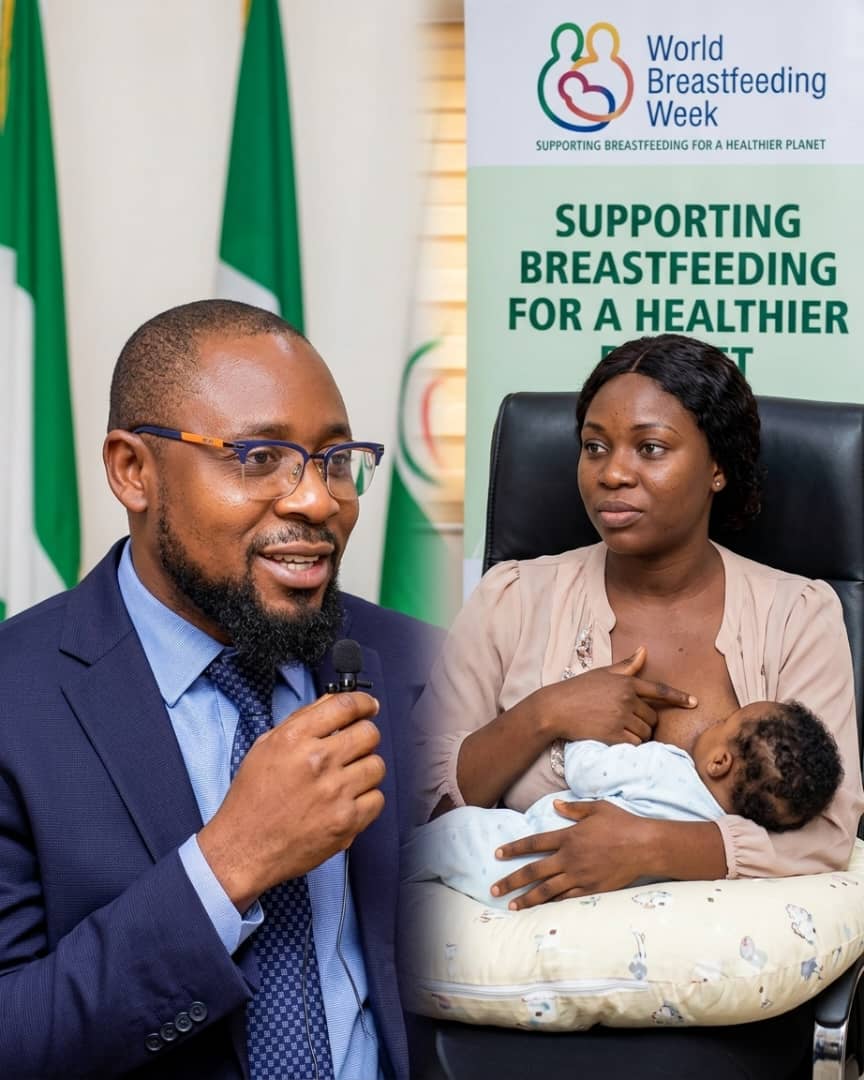
As the world observe this year’s World Breastfeeding Week 2026, from August 1 to 7, attention is drawn to one of the most effective and affordable interventions for improving the health and survival of children: “breastfeeding”.
Nigeria continues to face persistent gaps in optimal Infant and Young Child Feeding (IYCF) practices, particularly in early initiation and exclusive breastfeeding. Despite annual World Breastfeeding Week (WBW) commemorations, impact has been limited due to short-term, event-driven approaches.
The 2026 WBW with the theme “Breastfeeding for a Sustainable Start in Life: Strengthen what works” and with Hashtag: ‘Breastfeeding: Small Beginning; Big Impact” provides an opportunity to Launch the First 1000 Days of Life for Nutrition SBC Campaign is expected to nationally Shift from an event-based approach to a sustained behaviour change movement.
The Federal Ministry of Health and Social Welfare (FMoHSW), with support from UNICEF, has developed a comprehensive set of National Nutrition Social and Behaviour Change (SBC) Campaign materials focused on the first 1,000 days of life and are designed to address key behavioural barriers to optimal maternal, infant, and young child nutrition by promoting evidence-based practices such as early initiation of breastfeeding, exclusive breastfeeding for the first six months, continued breastfeeding for two years or beyond with appropriate complementary feeding, and improved maternal nutrition.
The campaign adopts a multi-channel approach to influence individual, household, and community-level behaviours, while also strengthening enabling environments within health systems, communities, and workplaces.
The goals of the WBW is to improve maternal and child nutrition outcomes by accelerating adoption of optimal breastfeeding and nutrition practices through a sustained SBC campaign while the objectives include launching the First 1000 Days of Life for Nutrition SBC Campaign during 2026 WBW, achieve wide visibility and engagement across national and state levels through different platforms, promote early initiation and exclusive breastfeeding practices and Strengthen enabling environments (facilities, workplaces, communities)
Sustain SBC engagement for nutrition throughout the year.
For Kogi State, however, this year’s observance is more than another annual public-health ceremony. It is an opportunity for renewed action, stronger community engagement and a deeper commitment to ensuring that every mother, regardless of where she lives, has the knowledge and support needed to breastfeed successfully.
The Kogi State Primary Health Care Development Agency (KSPHCDA) as the institution at the heart of primary healthcare delivery across the state is strategically positioned to take the message of breastfeeding from conference halls and media platforms to the communities, villages and households where mothers and newborns live.
World Breastfeeding Week is observed globally from August 1 to 7 and is supported by the World Health Organization, UNICEF and other partners.
The WHO describes breastfeeding as one of the most effective ways to ensure child health and survival, yet fewer than half of infants under six months globally are exclusively breastfed. This reality underscores the importance of a strong grassroots response.
Primarily, the slogans for this year WBW includes;
EMPOWER MOTHERS- SUSTAIN GENERATION.
BREASTFEEDING WORKs -LET’s STRENGTHEN IT TOGETHER.
BREASTFEEDING- SMALL BEGINININGS, BIG IMPACT.
In Kogi State, primary healthcare centres remain critical points of contact for pregnant women, nursing mothers and young children.
These facilities serve as powerful platforms for counselling mothers during antenatal care, promoting early initiation of breastfeeding, encourage exclusive breastfeeding for the first six months and helping mothers overcome common challenges that may discourage them from breastfeeding.
The KSPHCDA has strengthened the PHC systems that make breastfeeding support available at the grassroots.
The Agency has continued to promote breastfeeding counselling as an integral part of maternal and child healthcare services.
Every mother who visits a primary healthcare facility have access to accurate information and practical guidance. Health workers are equipped to address cultural misconceptions, misinformation and other barriers that may affect breastfeeding practices.
It is important to know that breastfeeding is a shared responsibility involving families, husbands, communities, employers, traditional and religious leaders, policymakers and the wider society.
A mother who returns to work needs an environment that enables her to continue providing breast milk for her child. A nursing mother needs the support of her husband and family.
Communities need to create an atmosphere in which breastfeeding is respected, protected and encouraged.
This is where the KSPHCDA always ensure it deepen its community-based approach. Through its network of primary healthcare facilities and community health structures, the Agency has transformed breastfeeding advocacy into a sustained grassroots movement.
Community dialogues, mother-to-mother support groups, antenatal education, postnatal counselling, radio programmes and outreach activities have been used to ensure that the message reaches women in both urban and hard-to-reach communities.
Kogi’s experience during the 2025 World Breastfeeding Week provides a useful foundation. The Kogi State Ministry of Health, working with the KSPHCDA, used the occasion to promote breastfeeding awareness and called for increased support for nursing mothers.
The activities included sensitization and public engagement as well as demonstrating the importance of collaboration in advancing maternal and child health.
For KSPHCDA, World Breastfeeding Week 2026 is therefore viewed as both a celebration and a call to action.
The Agency is seizing the opportunity to reinforce breastfeeding promotion across primary healthcare centres, strengthen the capacity of frontline health workers, encourage community ownership and deepen partnerships with relevant stakeholders.
There is also a compelling need to ensure that breastfeeding advocacy is linked to the broader maternal, newborn and child health agenda. A mother who receives quality antenatal care, skilled delivery services, postnatal support, immunisation services and nutrition counselling is expected to give her child a healthy beginning.
As Kogi State joins the rest of the world to mark World Breastfeeding Week 2026, the Kogi State Primary Health Care Development Agency is demonstrating that breastfeeding promotion is not merely an annual campaign but a sustained public-health commitment.
Indeed, the true success of World Breastfeeding Week will not be measured by what Kogi says during the celebration, but by what the state continues to do for mothers and children long after the Programme as the Agency expects mothers to do the needful.
The future of Kogi begins with the health of its children—and that future deserves a strong, sustainable and well-supported start.