Farouk Highlights Okene, Kabba, Greater Lokoja Projects, Identifies Vandalism as Major Challenge
By Atuluku Samuel
The Kogi State Government has unveiled plans to expand access to potable water across the three senatorial districts, with major interventions targeting the rehabilitation of existing facilities, completion of abandoned projects and development of new water infrastructure.
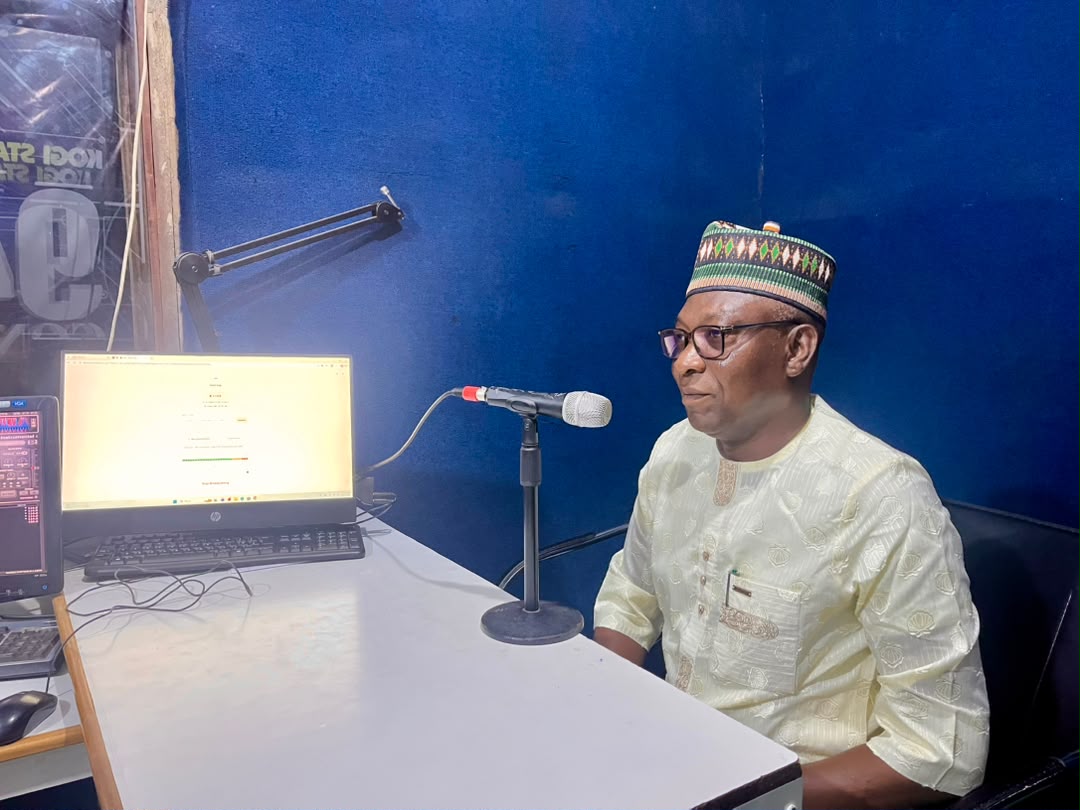
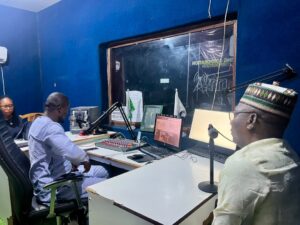
The Commissioner for Water Resources, Engr. Yahaya M.D. Farouk, FNSE, disclosed this during a live interview on Radio Kogi, where he outlined ongoing projects, proposed interventions and challenges confronting sustainable water supply across the state.
Farouk said the government was pursuing a comprehensive approach to improving water delivery, including the expansion of treatment capacity, installation of modern distribution infrastructure and adoption of sustainable water management strategies.
On plans to improve water supply in the central senatorial district, the Commissioner revealed that the Ministry was working on the design of a central water treatment facility to serve Adavi, Okehi, Okene and Ogori-Magongo Local Government Areas.
According to him, the proposed facility, to be located in Ogaminana, would integrate water from three dams to ensure adequate raw water supply for treatment and distribution to the benefiting communities.
He explained that the initiative was part of the government’s efforts to address water supply needs in the four local government areas through a coordinated and sustainable system.
Kabba Water Project Gets Fresh Attention
The Commissioner also disclosed that work had commenced on the completion of the abandoned Kabba water project following approval by Governor Ahmed Usman Ododo.
He confirmed that the contractor had mobilised to the site, expressing optimism that the renewed intervention would help improve access to potable water in Kabba and its environs.
The project is among the administration’s ongoing efforts to revive critical water infrastructure and improve service delivery to residents.
Greater Lokoja Waterworks Set for Rehabilitation, Expansion
On the Greater Lokoja Waterworks, Farouk said the recently approved intervention was designed to address damaged electro-mechanical equipment and restore the facility to effective operation.
He added that the proposed expansion would extend water supply to additional communities, including Felele, Zango and Ganaja.
The expansion plan, he explained, would involve the provision of additional reservoirs, booster stations and distribution networks to improve the reach and reliability of water supply across the Greater Lokoja area.
The Commissioner further disclosed that the Ministry was assessing water facilities in other parts of the state, including Isanlu and Ankpa, to determine the rehabilitation and construction requirements needed to improve access to potable water.
PPP, Metering and Flood Resilience
Beyond immediate infrastructure projects, Farouk said the Ministry was advancing sustainable water management strategies, including public-private partnerships and the installation of modern metering systems.
He noted that these measures were intended to strengthen the management of water facilities, improve operational efficiency and support the long-term sustainability of public water infrastructure.
The Ministry, he added, was also developing long-term flood resilience plans for vulnerable coastal communities along the Rivers Niger and Benue, in recognition of the need to protect communities and critical infrastructure from flood-related risks.
Vandalism Threatens Water Infrastructure
Despite the ongoing interventions, the Commissioner identified vandalism as one of the major challenges undermining the effective operation and sustainability of water facilities across the state.
He attributed the problem to the activities of some community members, internal sabotage and scavengers, warning that the destruction of public infrastructure could undermine government investments and delay the delivery of essential services.
Farouk therefore appealed to residents, community leaders and traditional institutions to take collective responsibility for protecting water facilities in their areas.
He stressed that community cooperation and public ownership of government infrastructure were crucial to ensuring that completed and rehabilitated projects continued to serve their intended purposes.
The Commissioner thanked the people of Kogi State for their patience and resilience, assuring them that the Ododo administration remained committed to expanding access to safe and potable water.
He reaffirmed the government’s determination to address existing challenges, complete priority projects and extend water supply to more communities across the state.