By
Mariam Adams
The Kogi State Government has reaffirmed its commitment to strengthening climate resilience, protecting the environment and promoting sustainable livelihoods across the state, as stakeholders gathered in Lokoja on Wednesday for the close-out of a climate-smart agriculture project implemented in Enjema District of Ankpa Local Government Area.
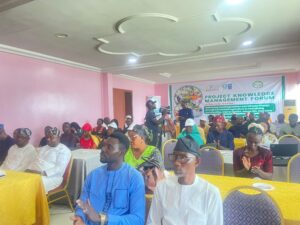
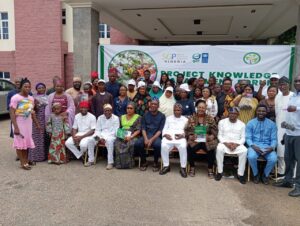
The Project Knowledge Management Forum and official close-out event of the United Nations Development Programme (UNDP)-funded Global Environment Facility Small Grants Programme (GEF-SGP) project, titled “Addressing Land Degradation and Climate Change through Sustainable Agriculture in Coal Mining Communities in Enjema District, Ankpa LGA, Kogi State,” brought together government officials, development partners, traditional institutions, civil society organisations and community beneficiaries to review the impact of the intervention and discuss ways of sustaining its gains.
Governor Ahmed Usman Ododo said his administration would continue to support initiatives that promote environmental sustainability, strengthen climate resilience and improve the livelihoods of communities across the state.
The Governor, who was represented at the event by the Commissioner for Environment and Ecological Management, Engr. Oluwasegun Joseph, commended the UNDP, GEF-SGP, the Climate and Sustainable Development Network (CSDevNet) and other partners for the intervention, describing it as a practical response to environmental degradation and livelihood challenges confronting communities affected by coal mining.
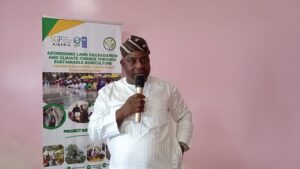
Engr. Joseph said the project aligns with the administration’s broader efforts to address environmental challenges, strengthen community resilience and promote sustainable management of the state’s natural resources.
He highlighted the government’s interventions in flood mitigation, erosion control and climate change resilience, noting that the Ododo-led administration had continued to pursue practical measures aimed at reducing environmental risks and safeguarding the wellbeing of citizens.
The Commissioner reaffirmed the state’s commitment to strengthening measures that promote responsible mining practices and environmental protection, particularly in communities affected by mining activities.
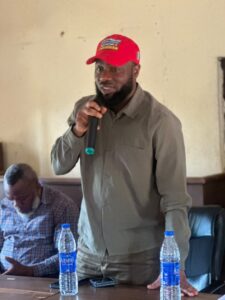
In his welcome address, the National Network Coordinator of CSDevNet, Mr. Steve Abuh, said the significance of the project extended beyond its formal completion, as it demonstrated how community-led interventions could contribute to environmental restoration while improving rural livelihoods.
Abuh disclosed that the project commenced in October 2025 and ended in May 2026, during which beneficiaries were supported with demonstration farms, Village Savings and Loan Associations (VSLAs), a solar-powered water system and a Community Green Action Plan (CoGAP).
He said the interventions were designed to provide residents with practical tools to sustain environmental action and improve their livelihoods beyond the project period.
He described the development of the CoGAP as particularly significant, saying it provides a framework for sustaining community priorities and strengthening environmental governance.
Also speaking, the National Coordinator of UNDP GEF-SGP Nigeria, Dr. Ibironke Favour Olubamise, said the programme was founded on the principle that lasting environmental solutions are achieved when communities are empowered to take ownership of the process.
Olubamise described the Enjema experience as a practical demonstration of that principle, noting that the community green action framework could provide useful lessons for similar initiatives in mining-affected communities across the country.
She commended the Kogi State Government, CSDevNet, Ankpa Local Government Area, traditional institutions, community members and other partners for their collaboration and commitment, while urging beneficiaries to protect and sustain the gains recorded through the project
The Chairman of Ankpa Local Government Area, Hon. Ademu Yahaya, also appreciated the project partners for choosing Enjema as a beneficiary community, noting the importance of interventions that respond directly to the needs of residents.
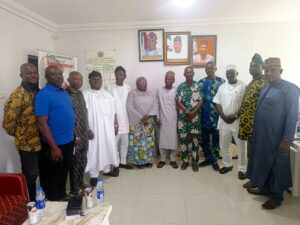
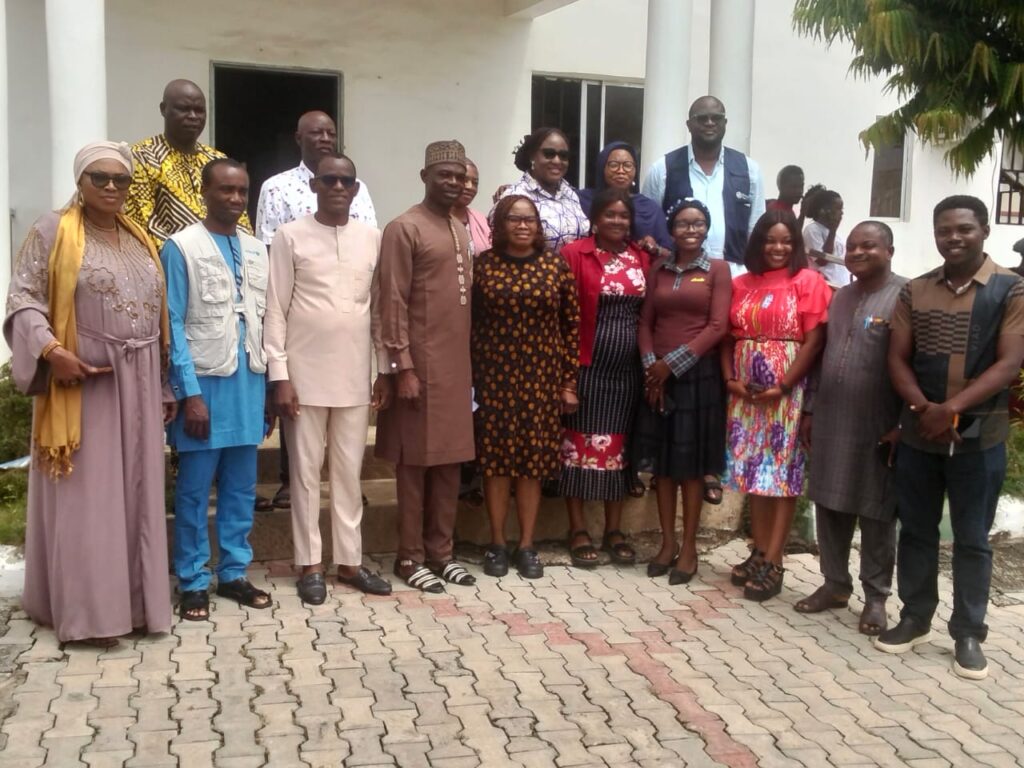
The event attracted the Executive Secretary of the Kogi State Emergency Management Agency (SEMA), Mr. Muktar Atima; representatives of the Ministries of Agriculture and Health; the Director-General of the Kogi Climate Change Agency; representatives of non-governmental organisations, traditional and community leaders, as well as beneficiaries from Enjema District.
For residents of the coal-mining community, the impact of the intervention was reflected in the experiences shared by beneficiaries, who expressed appreciation for the opportunities created through the project.
Speaking on behalf of the community, Mr. Umar Othman said years of pollution associated with coal-mining activities had affected water sources and farmlands, forcing residents to travel long distances in search of suitable land for farming.
He said the intervention had introduced residents to alternative and climate-smart livelihood opportunities, including fish farming, maize production, sack farming and palm tree planting.
Othman particularly highlighted fish farming as a new opportunity for residents who previously depended heavily on rivers, noting that pollution had made some of the traditional water sources unusable.
He added that sack farming had eased the burden of travelling long distances to cultivate crops, as residents could now bring fertile soil closer to their homes and grow crops such as yam.
While expressing appreciation to CSDevNet, UNDP, GEF-SGP and the Kogi State Government, Othman appealed for stronger enforcement of the reclamation of mined lands by mining companies to restore affected areas and return them to productive use.