Committee adopts coal as second commodity under One State, One Commodity initiative, targets exporters’ database, trade fair and global markets
By Taiye Bayode
Kogi State is stepping up its drive to break into the lucrative non-oil export market, with the State Committee on Export Promotion (SCEP) moving from policy discussions to a concrete action plan designed to turn the state’s agricultural wealth, solid minerals and entrepreneurial capacity into globally competitive products.
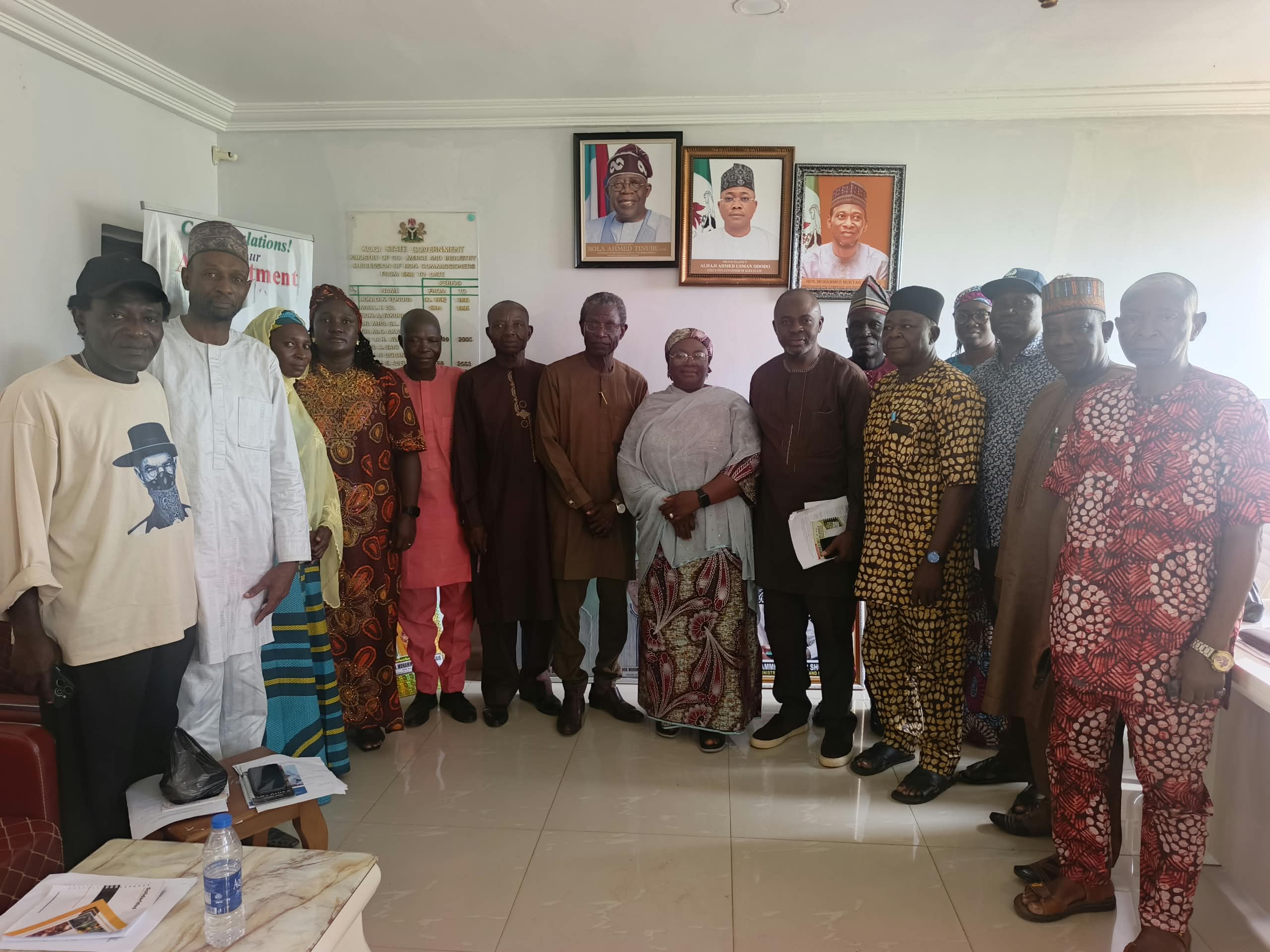
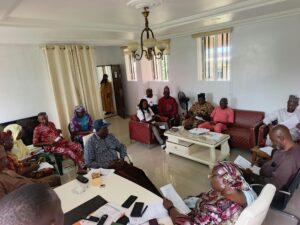
At its 3rd Quarter Meeting for 2026, held Wednesday at the State Secretariat, Lokoja, the Committee adopted “From Awareness to Action: Positioning Kogi State for Non-Oil Export Growth” as its working theme, setting the stage for an aggressive push to identify export-ready commodities, build the capacity of producers and exporters, improve product quality and connect Kogi businesses to international buyers.
The meeting, which brought together government agencies, farmers, exporters, industry players and other stakeholders, was convened to determine practical steps for accelerating the state’s non-oil export agenda during the remaining months of 2026.
Presiding over the meeting, the Chairman/Permanent Secretary of the Ministry of Commerce and Industry, Hajiya Musa-Amana Sualihat, challenged members to move beyond meetings, observations and policy statements to measurable action.
She said Kogi’s abundant agricultural commodities, solid minerals and entrepreneurial talent could become major economic assets only when systematically identified, developed, standardised, documented and connected to dependable markets.
According to her, the administration of Governor Alhaji Ahmed Usman Ododo is committed to repositioning the state’s economy for sustainable growth, stressing that the export agenda must be driven by reliable data rather than assumptions.
She identified the proposed State Export Product Profile and Exporter Database as critical tools for achieving that objective, explaining that accurate information on commodities, producers, volumes, quality and export capacity would enable government and private-sector actors to make informed decisions and respond quickly to genuine market opportunities.
The Committee also placed strong emphasis on capacity building, with training for exporters and Micro, Small and Medium Enterprises expected to cover export procedures, documentation, packaging, quality standards and other requirements necessary to compete in international markets.
Sualihat further called for deeper collaboration among producers, cooperatives, processors, exporters, financial institutions and government agencies, stressing that value addition must remain at the heart of Kogi’s export strategy if the state is to earn more from its natural and agricultural resources.
COAL JOINS CASHEW AS KOGI’S EXPORT PRIORITY
One of the major decisions reached at the meeting was the formal adoption of coal as an additional commodity under the One State, One Commodity initiative, complementing cashew.
The decision was based on the availability and quality of coal within the state and represents an expansion of Kogi’s strategy to identify commodities with the potential to anchor specialised production, processing and export opportunities.
The Committee also received updates on stakeholder engagement and reaffirmed its commitment to stronger coordination among institutions responsible for supporting trade and export development across Kogi.
Presenting export commodity reference materials, the Kogi State Coordinator of the Nigerian Export Promotion Council (NEPC), Mr. Akinlabi Adams, highlighted a range of products with export potential, including sesame seed, palm oil, groundnut, cashew, cotton, chilli pepper, coffee, rice, cassava and soya beans.
He outlined the quality specifications and international markets associated with the commodities and urged stakeholders, particularly the Chamber of Commerce, to leverage the trade and commercial desks of foreign embassies to attract international buyers and investors into Kogi’s productive sectors.
TRADE FAIR TO OPEN DOOR TO FOREIGN BUYERS
Another significant development was the announcement of plans by the Kogi Chamber of Commerce, Industry, Mines and Agriculture (KOCCIMA)/Kogi Shippers Association to organise a Trade Fair before November 2026.
Representing the association, Comrade Rajan Suleiman said the event would provide a platform for Kogi exporters to establish direct relationships with foreign embassies, investors and prospective international buyers.
He disclosed that the Chamber’s Abuja Liaison Office had already commenced engagement with sister chambers in Abuja and bilateral chambers as part of preparations for the event.
Beyond the exhibition itself, the Trade Fair is expected to be followed by structured business engagement sessions where specific export opportunities can be matched with the quantity, quality and product requirements of prospective buyers.
The Committee resolved to support the Trade Fair as part of its Fourth Quarter activities.
FROM DATABASE TO DEALS
The meeting also examined the role of SCEP as a facilitator of trade linkages between producers, exporters and buyers.
Members agreed that a credible and properly organised exporters’ database would be indispensable to Kogi’s ambition of responding rapidly whenever international demand emerges for products originating from the state.
The Committee consequently resolved to strengthen information-sharing and institutional collaboration, ensuring that producers and exporters are not merely identified but are properly positioned to meet the requirements of international markets.
The message from the meeting was clear: Kogi can no longer afford to treat its export potential as an untapped possibility.
From its farms and mineral deposits to its growing pool of entrepreneurs, the state possesses the raw materials for a stronger export economy. What SCEP is now pushing is the harder part—building the systems, standards, partnerships, data and market connections capable of converting those resources into sustainable income, jobs and investment.
Closing the meeting, Sualihat commended members for their constructive contributions and expressed optimism that the resolutions reached would translate into stronger results in subsequent quarters.
For Kogi’s non-oil export ambition, the direction has now been set: less talk, more production; less raw potential, more value addition; and, ultimately, more Kogi products finding their way into markets beyond Nigeria.