Governor Ahmed Usman Ododo and the Journey from Confluence to Commonwealth
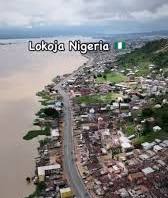
At Lokoja, two of Africa’s great rivers meet without surrendering their identities. The Niger arrives with its ancient memory, the Benue with its own force and character; together, they become a larger current. Few landscapes offer a more eloquent lesson in political philosophy: unity does not require the erasure of difference. It requires distinct peoples, histories and possibilities to discover a common direction.
That is the enduring truth of Kogi State as it celebrates its 35th anniversary. The Confluence State is not merely a geographical expression; it is a compelling Nigerian idea- a homeland where diversity can become civic strength, centrality can become economic advantage, and history can be transformed into hope.
A State Born as a Reunion
Created on August 27, 1991, from the old Kwara and Benue States, Kogi’s birth was more than an exercise in administrative mapmaking. Its official history describes the moment as the reunion of peoples who had once shared the political space of the former Kabba Province before being separated by earlier state-creation exercises.
This makes Kogi’s founding story especially profound. It was born not simply from division, but from reconnection; not merely from a decree, but from a long human desire to belong together again. Boundaries may be proclaimed in a day, but a shared identity is cultivated across generations.
From the Igala, Ebira and Okun to the Bassa, Nupe, Oworo, Ogori-Magongo, Kakanda, Kupa and several other indigenous communities, Kogi embodies an extraordinary plurality of languages, traditions and historical experiences. Its greatness lies not in pretending that these differences do not exist, but in ensuring that none becomes a barrier to common progress.
Its capital, Lokoja, occupies a distinguished place in Nigerian history. Once an administrative seat of the Northern Nigeria Protectorate, it remains a gateway between regions and a meeting point of commerce, culture and memory. Kogi borders nine states and the Federal Capital Territory, making it one of Nigeria’s most strategically connected territories. It is not situated at the nation’s margins; it stands at one of its most important hinges.
Yet geography is only an inheritance. Governance is what converts location into leverage. Mineral deposits beneath the soil do not automatically create prosperity above it. Fertile land does not feed a people without investment, roads, security, markets and modern agricultural systems. Centrality produces little unless it is supported by infrastructure, human capital and institutions.
At 35, therefore, Kogi’s defining question is no longer simply what nature has given it, but what leadership and citizenship are making of those gifts.
Leadership at the Age of Responsibility
This is where the leadership of His Excellency, Alhaji Ahmed Usman Ododo, FCA, acquires historic significance.
Governor Ododo assumed office on January 27, 2024, inheriting both the achievements of previous administrations and the unfinished responsibilities of state-building. His response has been marked by an admirable combination of continuity and renewal: preserving what serves the people, improving what requires greater effectiveness, and opening new pathways towards prosperity.
In a political culture where succession is sometimes treated as repudiation, Governor Ododo has demonstrated maturity by recognising that governance is a relay race. Every administration receives a baton from the past, adds its contribution and carries the common journey forward. His willingness to honour the state’s founding fathers and acknowledge the efforts of successive administrations reflects confidence rather than insecurity.
Governor Ododo’s preferred designation as the “Chief Servant” of Kogi State also speaks to an important moral understanding of power. Public office is not personal possession; it is a temporary trust. Leadership is not the privilege of being served, but the responsibility of organising government around the needs, dignity and aspirations of the people.
His strength lies in a calm, consultative and purposeful approach to governance. He does not mistake noise for vision or political theatre for achievement. His style reflects steadiness, accessibility and an appreciation that lasting development is built through patient coordination, disciplined execution and inclusive engagement.
Human Development as the First Infrastructure
The true measure of a government is not found only in monuments or official ceremonies, but in the quality of life available to ordinary citizens. On this score, the Ododo administration has built an increasingly persuasive record.
In education, 728 public schools are undergoing renovation under the Adolescent Girls Initiative for Learning and Empowerment. The administration has also funded public examinations for tens of thousands of pupils and students, recruited 1,500 teachers in its first phase, supported thousands of tertiary students through bursaries and scholarships, and provided conditional financial assistance to 13,359 adolescent girls to strengthen school enrolment, retention and transition.
These interventions reveal a government that understands education not simply as another budgetary sector, but as the state’s theory of the future. Roads may connect communities, but education connects generations. Buildings may transform skylines, but enlightened minds transform societies.
Healthcare has received similarly ambitious attention. More than 200 primary healthcare centres across Kogi’s 21 local government areas are being upgraded and remodelled, while over 80 revitalised facilities have already been commissioned for round-the-clock service. Health-insurance access was extended to 76,245 local-government workers, pensioners and students, while a substantial monthly intervention allowance was approved for doctors in the state civil service.
The philosophy is unmistakable: rural residence must not become a sentence to inferior healthcare. A mother in a distant community, a child in need of urgent attention or a pensioner managing a chronic condition deserves the protection of the state as much as anyone living near a major urban hospital.
Governor Ododo’s worker-friendly disposition has further strengthened the social contract. His administration implemented a ₦72,500 minimum wage, granted tax relief on the approved wage, introduced a ₦10,000 pension-harmonisation allowance—the first reported adjustment of its kind in two decades- and sustained regular salary and pension payments. Promotions have been cash-backed, annual leave bonuses paid, and monthly resources committed to gratuities for local-government retirees.
These are not merely financial transactions. They are moral statements that labour has dignity, retirement must not become abandonment, and government must honour those whose working years sustained its institutions.
Turning Location into Leverage
Governor Ododo’s larger economic vision is to move Kogi from being merely a route through which people and goods pass into a productive centre where value is created, processed and retained.
The construction phase of the Kogi International Airport at Zariagi represents a bold attempt to convert the state’s strategic location into an aviation and logistics advantage. Designed to include a 3.6-kilometre runway, cargo facilities and modern passenger infrastructure, the airport is conceived not simply as a prestige project, but as an economic artery linking agriculture, solid minerals, manufacturing, tourism and commerce to wider markets.
The proposed Kogi–Hunan Special Economic Zone in Ajaokuta carries a similarly transformative promise. Alongside the reconstruction of strategic roads, rural farm-access projects and the development of electricity infrastructure, it forms part of an emerging architecture intended to position Kogi as a manufacturing, mineral-processing and logistics hub.
Contracts valued at approximately ₦6.39 billion were awarded for the rehabilitation of 106.36 kilometres of rural farm roads, supported by additional drainage infrastructure. Electricity interventions have included a programme for 30 units of 500KVA transformers across the three senatorial districts, transmission planning and the creation of a state electricity regulatory framework.
The political economy behind these projects is especially important. Too many resource-rich territories export raw value and import poverty. Their minerals leave unprocessed, their agricultural produce is sold without value addition, and their young people migrate in search of opportunities that should have been created at home.
Governor Ododo’s ambition is different: goods should be produced in Kogi, processed in Kogi, transported through Kogi and sold to markets within and beyond Nigeria. That vision seeks to replace an extractive economy with a productive one. It is the journey from merely possessing resources to building prosperity; from being a passage to becoming a destination.
Unity as Economic Infrastructure
Perhaps the most philosophically compelling element of Governor Ododo’s 35th-anniversary vision is his insistence that “unity is an economic necessity.”
This is more than an appealing phrase. It is a serious theory of development. Fairness creates confidence; confidence nurtures trust; trust strengthens peace; and peace attracts investment. Where communities feel excluded, suspicion grows. Where political competition becomes ethnic hostility, development capital retreats. Where citizens do not believe that the state belongs to them, public institutions lose legitimacy.
Unity, therefore, is not ceremonial rhetoric. It is infrastructure—every bit as essential as roads, electricity and water. Investors require stability. Enterprise depends upon confidence. Sustainable development flourishes where citizens believe that opportunity is not determined by ethnicity, geography, religion or political affiliation.
Governor Ododo’s proposal for a Kogi Shared Prosperity and Transformation Council is a visionary response to this reality. Intended to support the Kogi State Development Plan 2024–2056, the Council would bring together political leaders, academics, professionals, entrepreneurs, development experts, young people and distinguished Kogites at home and in the diaspora.
Its importance lies in the recognition that the state is greater than the government of the day. Development cannot be the private undertaking of one administration, party, ethnic group or senatorial district. It must become a commonwealth of ideas, abilities and responsibilities, with participation founded upon integrity, competence and the capacity to contribute.
This is the deeper democratic meaning of inclusion. Democracy is not completed when a majority wins an election; it matures when every community retains confidence that it has a stake in the future.
Renewed Hope Through Subnational Action
Governor Ododo’s development agenda also reflects the value of constructive cooperation between the federal and state governments. His administration’s infrastructure, security, agricultural and social-development priorities complement President Bola Ahmed Tinubu’s Renewed Hope Agenda.
Projects inspected during the Presidential Media Tour in July 2026—including internal roads connecting farms and rural communities and primary healthcare facilities—were commended for their alignment with national development objectives.
This is cooperative federalism at its best: not an exchange of political courtesies, but the convergence of vision, policy and resources around the welfare of citizens. Governor Ododo deserves commendation for cultivating the relationships required to attract federal attention and national opportunities while maintaining a clear state-centred development programme.
The Next Current
Thirty-five years is a moment of celebration, but it is also an age of responsibility. Kogi is old enough to have accumulated experience and young enough to pursue greatness with audacity. The founding generation secured the state; the present generation must secure its prosperity.
Governor Ahmed Usman Ododo has given this anniversary both language and direction. He has invited Kogites to move beyond nostalgia towards shared responsibility; beyond resource possession towards value creation; beyond sectional competition towards a common development covenant.
His record demonstrates a leader working to make government present in the classroom, the health centre, the farm, the workplace, the rural road and the retirement years of those who served. His vision seeks to join physical infrastructure with human dignity, economic ambition with social compassion, and political authority with the ethics of service.
As Kogi celebrates 35 years of statehood, its finest days need not belong only to memory. They can rise from what is being built today- from renovated schools and revitalised health facilities; from roads leading farmers to markets; from a new airport opening the state to investment; from industries processing Kogi’s resources; and from a people learning to see diversity not as a wound, but as wealth.
At the confluence, the rivers continue their journey as one mighty current. That ancient movement remains Kogi’s most powerful instruction: when different streams discover a shared destination, geography becomes destiny and possibility becomes power.
Under Governor Ahmed Usman Ododo, Kogi is being summoned to become more than the place where rivers meet. It is being positioned as the commonwealth where history meets vision, resources meet enterprise, leadership meets compassion and every citizen meets the promise of a greater tomorrow.
Happy 35th anniversary to Kogi State- the Confluence of Opportunities and the emerging home of shared prosperity.
Folorunso S. Aluko
Director General
Progressive Governors Forum