By
Taiye Bayode
Long before a shovel ever broke ground, most infrastructure announcements read the same way: a Commissioner speaks, a ribbon is promised and cut, and a state moves on.
But ever so often, a project comes along whose real story lies buried beneath the press statement, waiting for someone to dig it out.
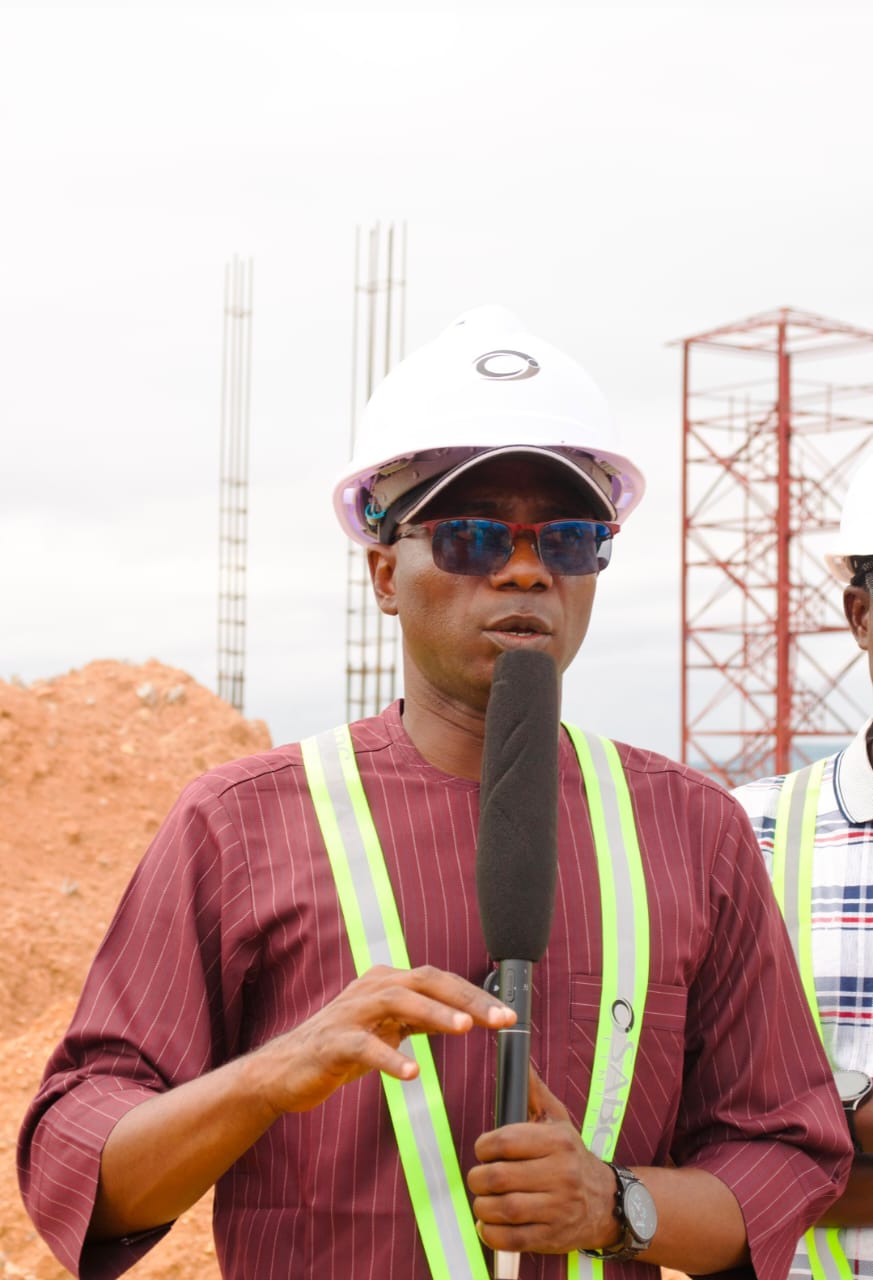
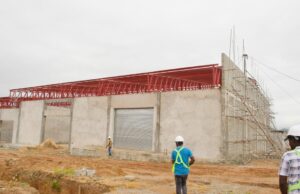
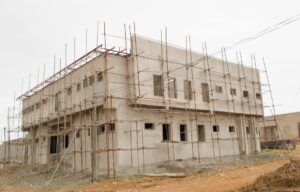
The Ultra Modern Market rising on 25 hectares of land in Lokoja is one of those projects. On paper, it is a construction update. In practice, it may be one of the most consequential employment experiments Kogi State has attempted in years, quietly reshaping how thousands of ordinary people will earn a living long after the cameras have left the site.
To understand why, it helps to start with what is actually being replaced.
For years, the International Market at Nataco carried a weight it was never designed for; built for a smaller, slower version of Lokoja, it has spent the last several years buckling under the pressure of a growing capital city, congesting major routes, exposing traders and commuters alike to avoidable accidents, and operating in conditions that no modern trading hub should tolerate.
It is this reality, more than any grand vision statement, that makes the Ultra Modern Market less a luxury project and more an overdue correction.
Government does not need to convince Lokoja residents that Nataco is overcrowded; they already know it, because many of them navigate its chaos daily.
What is being built in its place, however, goes well beyond a straightforward replacement.
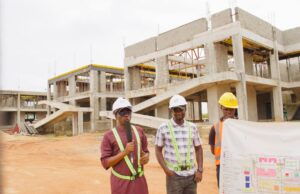
Walk through the blueprint, and nearly every structure tells its own employment story. The open trading spaces and lock-up shops will absorb traders relocating from seven existing markets across Lokoja, but each of those shop spaces will need staff beyond the trader alone – sales assistants, stock handlers, cleaners, and porters, multiplying the true headcount far beyond what a simple shop count suggests.
The market halls, designed to consolidate bulk trading under one roof, typically demand loading crews, weighmasters, and logistics coordinators to keep goods moving efficiently between suppliers and retailers, a layer of employment that rarely makes it into official announcements but is often where the bulk of daily wages are earned.
Then there are the facilities that set this project apart from a conventional market. A technology hub does not run itself; it requires IT support staff, digital literacy trainers, and technicians to help traders migrate from cash-only, paper-based transactions to digital ones, a shift that could, in time, feed directly into the state’s broader push to modernise revenue collection and business registration. A banking facility on-site means teller staff, security personnel, and financial service agents, effectively planting a small branch economy inside the market itself.
A clinic demands nurses, a resident doctor or two, pharmacists, and support staff, turning healthcare into its own employment category tied directly to the market’s daily operations. Fire and security stations will require trained personnel working in shifts, every single day the market operates, not merely during emergencies.
A food court will need cooks, servers, cleaners, and suppliers of raw food items, effectively creating a mini hospitality economy within the market’s walls, one that could rival standalone restaurants in scale if patronage meets expectations. Even the modern butchery, often the most overlooked line item in these announcements, implies a working chain of butchers, meat inspectors, refrigeration technicians, and delivery hands operating daily.
This is before counting the warehouses, which by their scale alone suggest inventory managers, forklift operators, and dispatch riders, or the parking areas, which will likely need attendants and traffic marshals to manage the flow of commercial vehicles moving in and out of the complex every day.
Multiply this pattern across every facility named in the government’s own description of the project, and the claim that the market will create “thousands of direct and indirect jobs” starts to look less like political rhetoric and more like straightforward arithmetic. Direct jobs will come from within the market’s walls – shop attendants, market officials, facility staff. Indirect jobs will ripple outward – the food suppliers stocking the food court, the transporters moving goods to and from the warehouses, the artisans maintaining the buildings, and the small businesses that will inevitably spring up around the market’s perimeter to serve the thousands who will pass through it daily.
For small and medium-scale enterprises specifically, the implications may run deeper still. A market of this design does not simply provide shop space; but provides infrastructure that SMEs typically cannot afford to build alone – banking access, security, technology support, and a built-in customer base drawn from the consolidation of seven markets into one.
For a small trader who once operated out of a congested, ageing facility like Nataco, this shift could mean lower operational risk, better access to financial services, and a more structured environment in which to grow beyond subsistence trading into something closer to a formal enterprise.
It is not difficult to imagine a trader who once sold from an open stall eventually running a registered small business with a bank account, digital records, and repeat customers, simply because the environment around them changed.
There is also a geography dimension worth noting; Kogi’s position at what officials often describe as the crossroads of Nigeria means a market of this scale is unlikely to serve only local demand. Traders and transporters moving goods between the north and south, or the east and west, routinely pass through the state, and a modern, well-secured trading hub sitting along those routes could plausibly draw commercial activity that would otherwise bypass Lokoja entirely.
If that happens even modestly, the employment effect would not stop at the market’s gates; it would extend to transport operators, roadside vendors, and hospitality businesses serving the traffic the market generates.
None of this happens by accident, and it would be incomplete to talk about the market’s potential without acknowledging the policy direction driving it.
The project sits inside a wider Urban Renewal Agenda that the Ododo administration has been pursuing, one that pairs environmental clean-up efforts with strategic infrastructure investment, on the premise that a city cannot modernise its economy while its commercial backbone remains stuck in decades-old infrastructure.
Whatever one makes of that broader agenda, the market itself stands as a useful testament that this theory holds: which is that, fixing the physical spaces where ordinary commerce happens can, on its own, generate employment at a scale that outpaces the cost of building it.
Now some might wonder whether the Ultra Modern Market will deliver on the scale of employment being projected, and how it will ultimately depend on execution, how quickly construction finishes, how smoothly traders are relocated and supported through the transition, and how well the promised technology and financial infrastructure actually function once the doors open.
Markets, after all, are only as good as the systems that keep them running – a technology hub with no technicians, or a food court with no reliable supply chain, would quietly undercut much of the employment story described here.
But the architecture of the plan itself, facility by facility, tells a story that goes well beyond bricks and shop fronts. It is, in effect, a blueprint for how a single infrastructure project can seed an entire micro-economy – one job, one shop, and one small business at a time, with Lokoja’s traders as its first and most direct beneficiaries in accordance with the vision of His Excellency, Kogi State Governor, Alhaji Ahmed Usman Ododo.