By Princess Funsho Sumanu
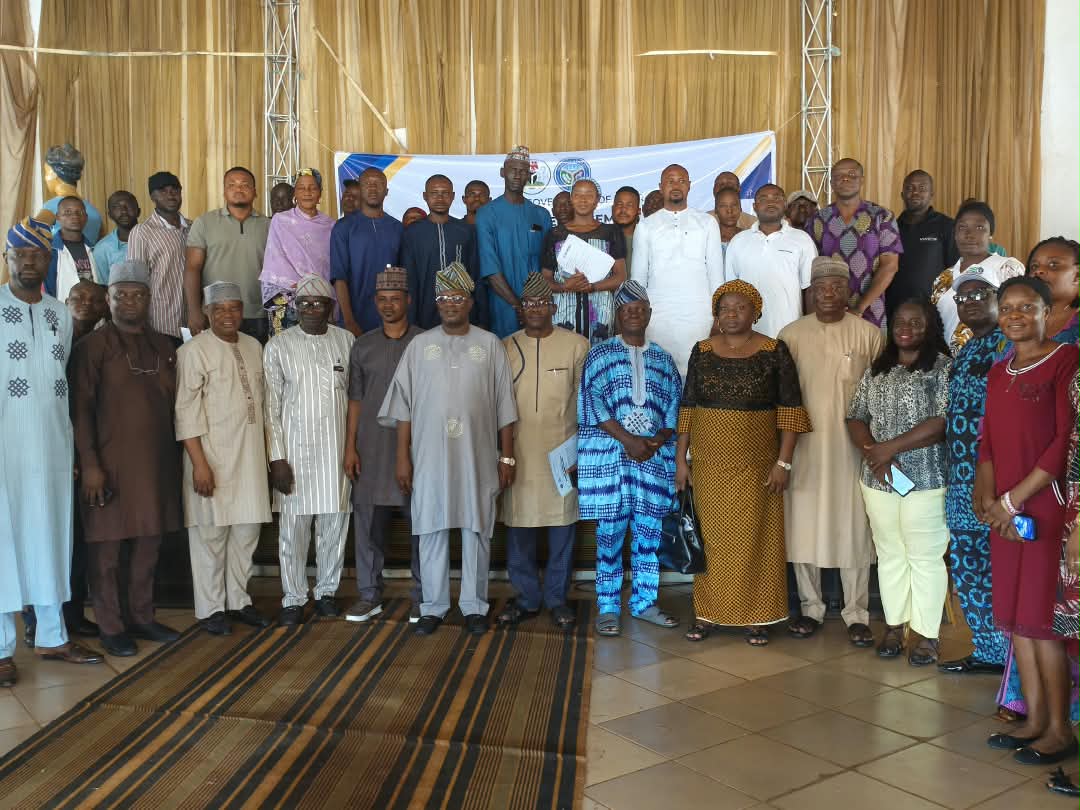
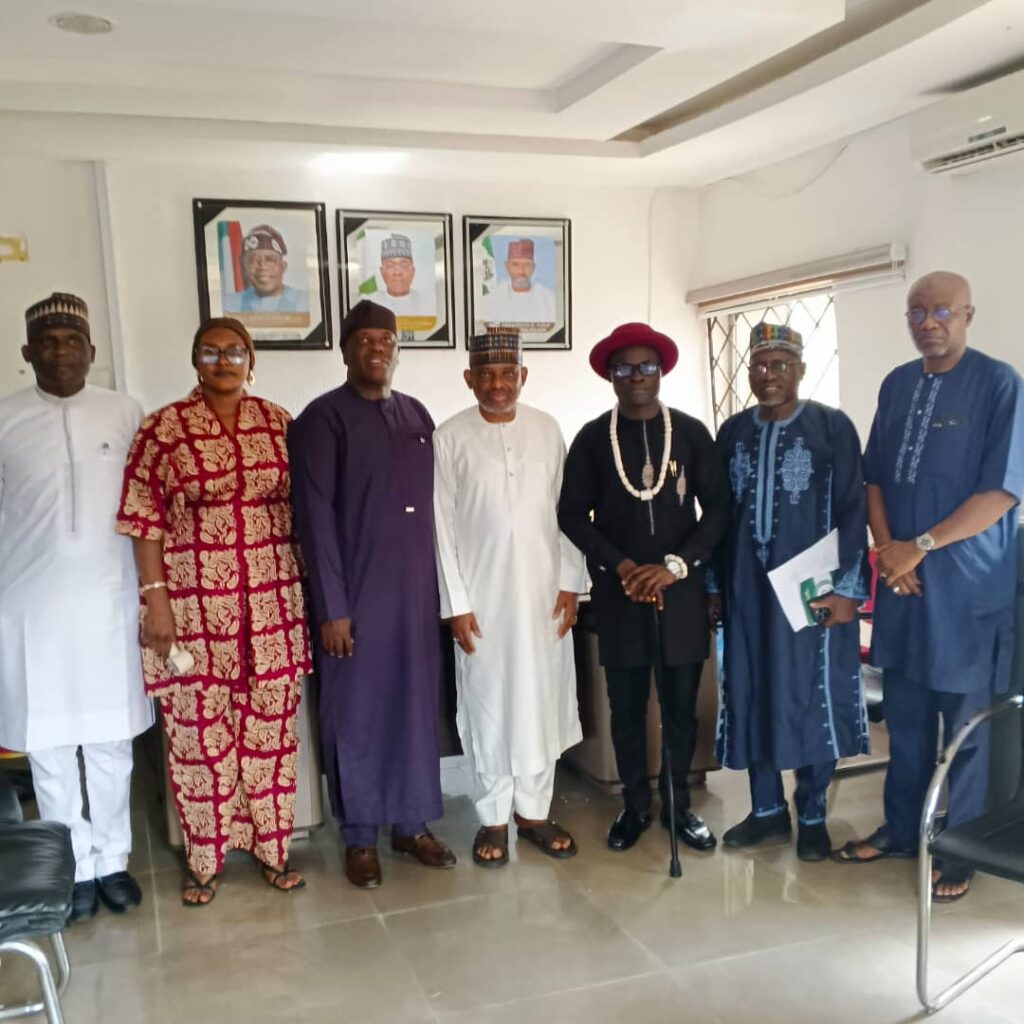
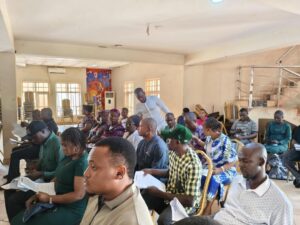
The Kogi State Government has taken its citizens’ engagement on the preparation of the 2027 Budget to Anyigba, in Kogi East Senatorial District, with stakeholders calling for increased investment in agriculture, rural infrastructure, education, security and other critical sectors to improve livelihoods and accelerate development.
The engagement, organised by the Kogi State Ministry of Finance, Budget and Economic Planning, is part of the state government’s efforts to promote participatory budgeting and ensure that the 2027 Budget reflects the needs, priorities and aspirations of citizens across the state.
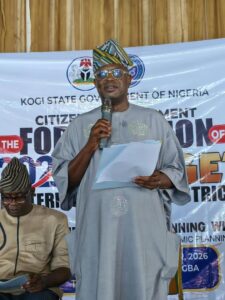
Representing the Commissioner for Finance, Budget and Economic Planning, Hon. Asimaju Asiru Idris, FCA, the Senior Special Adviser, Hon. Olajide Samuel, reiterated the importance of citizens’ participation in shaping budget priorities and ensuring that public resources are directed towards projects that deliver tangible benefits to the people.
The Commissioner emphasised that the budget preparation process provides an opportunity for the government to listen to citizens, identify pressing needs and establish priorities that will guide public expenditure in the coming fiscal year.
He stressed the need for transparency, accountability, effective resource allocation and proper implementation of budgeted projects, noting that a people-centred budget must translate government plans into measurable improvements in the lives of residents.
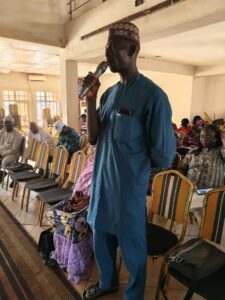
The engagement also provided a platform for stakeholders from different sectors to make recommendations on areas requiring government attention as preparations for the 2027 fiscal year progress.
In his presentation, the Executive Director of the Renaissance Care and Empowerment Foundation (RECEF), Ambassador Idris Ozovehe Muraina, called on the state government to adopt a coordinated, evidence-based and development-driven approach to the 2027 Budget, with particular attention to the agricultural potential and development needs of Kogi East.
Ambassador Muraina said the town hall meeting came at a critical stage of budget preparation, when citizens still had the opportunity to influence priorities before the finalisation of the proposed budget.
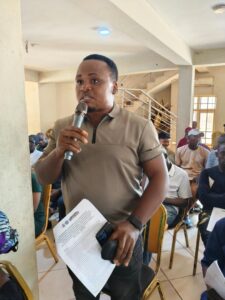
He explained that the engagement should not be treated as an opportunity to react to an already completed budget, but as a platform for the government to listen to citizens, test proposed expenditure against their everyday realities and ensure that the eventual Appropriation Bill addresses the most urgent needs of the people.
He argued that Kogi State needed not merely a bigger budget but one that was better connected to the state’s development priorities, supported by evidence and capable of producing measurable improvements in citizens’ lives.
He further urged the government to use the Kogi State Development Plan 2024–2056 as a guide for annual budgeting, ensuring that major allocations were linked to clear development objectives, measurable outcomes, timelines and institutions responsible for implementation.
Agriculture Must Translate into Prosperity
Focusing on Kogi East, Ambassador Muraina described the senatorial district as an important agricultural hub, with fertile land, a large farming population and significant potential in cashew, cassava and other agricultural value chains.
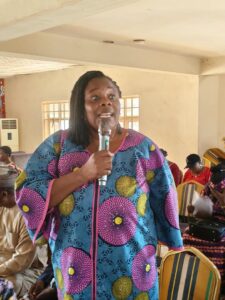
He noted that despite these advantages, many farming households continued to experience poverty because of security challenges, poor feeder roads, inadequate storage and processing facilities, limited access to affordable finance, and insufficient agricultural extension services.
According to him, the situation presents a contradiction in which communities with considerable agricultural potential can remain economically disadvantaged because the systems required to convert production into prosperity are inadequate.
He urged the government to approach agricultural development as an integrated rural economic system, linking security, farm production, roads, storage, processing, markets, finance, electricity and basic social amenities.
Ambassador Muraina stressed that security must be treated as a priority for agricultural development, explaining that farmers cannot contribute effectively to food security and economic growth when they are afraid to access their farms.
He called for stronger intelligence and early-warning systems, improved rapid-response capacity and closer coordination among security agencies, traditional institutions, local authorities and communities, particularly in vulnerable farming areas.
He also urged the government to prioritise the rehabilitation of feeder and internal linkage roads connecting farming communities to markets, aggregation centres, processing facilities and major highways.
He explained that rural roads were not merely transport infrastructure but essential economic links that enable farmers to move produce, access services and participate in wider markets.
Call for Storage, Processing and Affordable Agricultural Finance
The REDEF executive director called for increased investment in aggregation centres, warehouses, drying platforms, cold-chain facilities and other appropriate preservation systems to reduce post-harvest losses.
He maintained that agricultural production without adequate preservation and processing would limit the economic benefits available to farmers and their communities.
For cassava, he advocated investment in processing into products such as gari, high-quality cassava flour and starch, while recommending greater local processing, grading, packaging and market development for cashew.
He also called for small and medium-scale facilities to preserve and process fruits into products such as juice and dried fruit, thereby extending shelf life, creating rural employment and retaining more agricultural value within the state.
On agricultural financing, Ambassador Muraina recommended the establishment or expansion of accessible, low-interest revolving finance schemes for verified farmers, cooperatives, women and young agripreneurs.
He said repayment arrangements should reflect agricultural production cycles and that input support, including fertiliser, improved planting materials, mechanisation services and crop protection products, should be transparently managed to ensure that genuine farmers benefit.
He further advocated stronger agricultural extension services, improved cassava planting materials, climate-smart farming practices, small-scale irrigation and water-harvesting initiatives.
Stakeholders Urged to Link Budget Spending with Poverty Reduction
Ambassador Muraina stressed that the impact of the 2027 Budget should ultimately be measured by improvements in household welfare, including better farm incomes, accessible roads, reliable electricity, potable water, functional healthcare, quality education and increased opportunities for young people.
He urged the government to coordinate rural infrastructure with productive agricultural clusters, noting that communities should not be regarded merely as sources of agricultural produce but as places where citizens deserve decent living conditions.
He cautioned against spreading scarce public resources across numerous disconnected projects without clear development outcomes.
According to him, every major capital allocation should answer fundamental questions about the problem being addressed, the communities expected to benefit, its connection to the State Development Plan, the implementation timeline and the institution responsible for delivery.
He proposed that the 2027 Budget should prioritise improved rural security, feeder roads, agricultural storage and processing facilities, affordable credit, transparent input support, rural electrification, potable water, healthcare, education and digital connectivity.
He also called for a reliable development baseline containing information on farming populations, crop production areas, security concerns, road conditions, storage gaps, processing capacity, access to finance and the availability of basic amenities.
Such information, he explained, would help the government avoid duplication, direct limited resources to areas of greatest need and assess whether interventions were producing meaningful results.
Ambassador Muraina further urged the government to strengthen project monitoring and public reporting, noting that citizens should be able to track completed roads, farmers reached, storage capacity created, produce processed, jobs generated and other measurable outcomes rather than being presented only with budgetary allocations.
He maintained that meaningful public participation must go beyond consultation, adding that citizens should be able to see a clear connection between the recommendations made at town hall meetings and the projects eventually funded and implemented.
He concluded that the success of the 2027 Budget should not be determined simply by the amount allocated to Kogi East, but by the extent to which the allocations improve security, increase agricultural productivity, reduce post-harvest losses, create jobs and improve the living conditions of ordinary people.
Education Sector Seeks Greater Investment in Schools and Staffing
Also speaking at the engagement, the Deputy Provost of the Kogi State College of Education, Ankpa, Dr. Ibrahim A. Aminu, who represented the Provost, Dr. Fashagba Paul Femi, called on the state government to give greater attention to education in the preparation of the 2027 Budget.
Dr. Aminu commended the initiative to engage stakeholders before finalising budget priorities and expressed hope that the process would promote better planning, effective resource allocation, transparency and accountability.
He described education as a major driver of economic growth and national development, stressing that sustainable progress would be difficult to achieve without adequate investment in educational institutions.
He urged the government to prioritise infrastructure development across primary, secondary and tertiary institutions, including colleges of education, to improve teaching and learning conditions.
The education representative also drew attention to the shortage of teaching personnel in some communities, noting that the imbalance between the number of teachers and students affected the quality and effectiveness of education.
He called for more aggressive recruitment of qualified teachers to address staffing gaps and ensure that educational institutions had the personnel required to meet their responsibilities.
Dr. Aminu further stressed the need to improve facilities and strengthen the capacity of educational institutions to deliver quality services.
He appealed to the state government to give education the necessary attention in the 2027 Budget, describing investment in the sector as essential to the development of individuals, communities and the state.
Building a Budget Around Citizens’ Priorities
The contributions at the Anyigba engagement reinforced the need for a budget preparation process that takes account of the different needs of communities and sectors while ensuring that available resources are allocated responsibly.
The engagement in Kogi East follows the earlier citizens’ sensitisation exercise in Kogi West Senatorial District, extending the state government’s effort to involve stakeholders across the three senatorial districts in shaping the 2027 Budget.
Through the process, the Ministry of Finance, Budget and Economic Planning is providing a platform for citizens, community representatives, civil society organisations and sector stakeholders to express their priorities and contribute to the state’s development agenda.
The discussions underscored the importance of aligning annual budget decisions with the Kogi State Development Plan 2024–2056, strengthening accountability and ensuring that projects are selected and implemented according to clearly defined needs and expected outcomes.
 y
As preparations for the 2027 fiscal year continue, the central message from the Anyigba engagement was that public expenditure must translate into practical improvements in the lives of citizens.
For Kogi East, this means connecting agricultural potential with security, accessible roads, storage and processing facilities, affordable finance and essential social services, while ensuring that educational institutions receive the attention needed to support long-term development.
The ultimate measure of a successful budget, stakeholders maintained, is not simply the number of projects listed or the amount appropriated, but the difference those projects make in the lives of the people.
The state government’s continuing engagement with citizens is therefore an important step towards a 2027 Budget that is inclusive, evidence-based, accountable and responsive to the development aspirations of Kogi State.