By Joseph Adama
The development of any society cannot be complete when a significant segment of its population is left behind. Women constitute a powerful force in shaping families, building communities, strengthening economies and determining the future of generations. For Kogi State to achieve sustainable development, harnessing the enormous but largely untapped potential of its women must become a strategic priority.
Women are not merely beneficiaries of government development programmes; they are active drivers of economic growth, social transformation and community development. From agriculture and commerce to education, healthcare, entrepreneurship, public administration and community leadership, women make invaluable contributions to the progress of the state.
Their resilience, creativity, resourcefulness and capacity to manage competing responsibilities make them indispensable partners in the quest for a prosperous and inclusive Kogi State.
Yet, despite their enormous contributions, many women across the state continue to face barriers that limit their ability to realise their full potential. These include inadequate access to capital, limited business opportunities, educational disadvantages, unemployment, gender-based discrimination and insufficient representation in leadership and decision-making positions.
In rural communities, these challenges are often more pronounced, leaving many hardworking and enterprising women unable to translate their abilities, skills and ambitions into sustainable economic opportunities.
Education: The Foundation of Women’s Empowerment
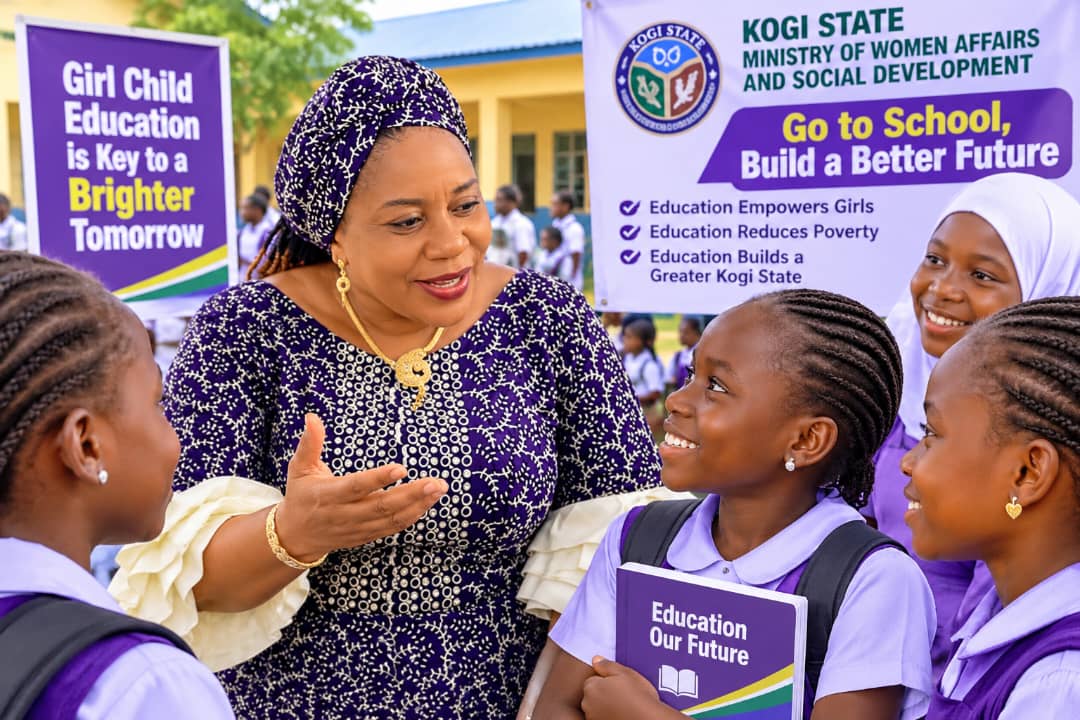
Investing in women begins with investing in their education. An educated woman is better equipped to make informed decisions, secure meaningful employment, establish businesses, support her family and contribute positively to society.
Girls must be encouraged to remain in school and pursue their educational ambitions, while women who missed formal educational opportunities should be supported through adult literacy programmes, vocational training and relevant skills acquisition initiatives.
Education empowers women with knowledge, confidence and the capacity to participate meaningfully in economic, social and political development.
Economic Empowerment: Unlocking Women’s Productive Capacity
Equally important is economic empowerment. Women engaged in agriculture, petty trading, food processing, tailoring, crafts and other small-scale enterprises require access to affordable financing, grants, modern equipment, business development training and sustainable markets.
Providing these opportunities will improve women’s financial independence, stimulate local production, reduce poverty and strengthen household economies across Kogi State.
The agricultural sector, in particular, presents enormous opportunities for women’s economic participation. Women play significant roles in farming, food processing, preservation and marketing. Supporting them with improved seedlings, modern farming techniques, agricultural extension services, storage facilities and access to markets will boost productivity, strengthen food security and create additional income streams for families and communities.
When women farmers are adequately supported, the entire agricultural value chain benefits.
Women’s Health and Protection Must Remain a Priority
Women’s health and well-being must also remain central to the state’s development agenda. Access to quality maternal healthcare, reproductive health services, family planning, cancer awareness and screening, proper nutrition and mental health support is essential.
A healthy woman is better positioned to pursue her aspirations, raise healthy children and participate actively in community development. No empowerment programme can achieve its full potential without deliberate attention to women’s health, welfare and dignity.
Another critical concern is the protection of women and girls against gender-based violence, domestic abuse, sexual exploitation, child marriage, human trafficking and other harmful practices.
True empowerment goes beyond financial assistance. It must guarantee safety, justice, dignity and equal opportunities. Women and girls should be encouraged to speak out against abuse, while relevant institutions must strengthen reporting mechanisms, provide appropriate support services and ensure that perpetrators are held accountable in accordance with the law.
Promoting Women’s Participation in Leadership and Governance
Beyond economic and social empowerment, Kogi State must continue to create opportunities for women to occupy leadership positions and participate meaningfully in governance.
Women possess the capacity, experience and perspectives required to contribute meaningfully to policymaking, public administration and community development. Their inclusion in decision-making processes will help ensure that government policies and development programmes reflect the needs and aspirations of the entire population.
A society that excludes women from leadership denies itself access to a significant pool of talent, experience and innovative ideas.
Building Sustainable Empowerment Programmes
The Ministry of Women Affairs and Social Development has a critical responsibility in coordinating policies, initiatives and interventions aimed at addressing the challenges confronting women and girls.
Through strategic partnerships with government agencies, development organisations, civil society groups, financial institutions, traditional institutions and the private sector, the Ministry can expand opportunities for women and girls across the 21 Local Government Areas of Kogi State.
There is, however, a need to move beyond one-off empowerment distributions towards sustainable interventions that deliver measurable and lasting results.
Women who benefit from empowerment programmes should be monitored, mentored and supported to grow their businesses, expand their productive capacities and become employers of labour. Skills acquisition initiatives must also be linked to actual economic opportunities, with beneficiaries receiving the necessary guidance and support to transform acquired skills into sustainable livelihoods.
The ultimate objective should not simply be to distribute equipment or provide financial assistance, but to create financially independent women who can sustain their businesses, support their families and contribute to the wider economy.
Investing in Women Is Investing in the Future
Importantly, investing in women should never be regarded as an act of charity or favour. It is a strategic investment in human capital, economic growth, poverty reduction and social stability.
When a woman becomes economically independent, the benefits often extend beyond her immediate needs to her children, household and wider community. When girls receive quality education, society gains a generation of informed, productive and confident citizens.
As Kogi State continues to pursue its development aspirations, the inclusion and empowerment of women must remain an integral part of its growth strategy.
Government, development partners, community leaders and private organisations must recognise that the future of the state is closely connected to how effectively it harnesses the talents, abilities and productive capacities of its women.
The state cannot afford to overlook the creativity of its female entrepreneurs, the intelligence of its educated women, the productivity of its female farmers, the resilience of rural women or the leadership potential of its young girls.
Every woman empowered represents a family strengthened, a community uplifted and a future made brighter.
The message is clear: investing in women is not simply about improving the lives of women; it is about building a stronger economy, healthier families, safer communities and a more prosperous society.
If Kogi State desires inclusive and sustainable development, empowering women must not be treated as an afterthought. It must be a deliberate, continuous and measurable commitment.
Because when women rise, families rise; when families rise, communities develop; and when communities develop, Kogi State moves forward.