As the World Marks 60 Years of International Literacy Day, Nigeria and Kogi Renew Commitment to Education
By Amodu Ojochogu Gloria
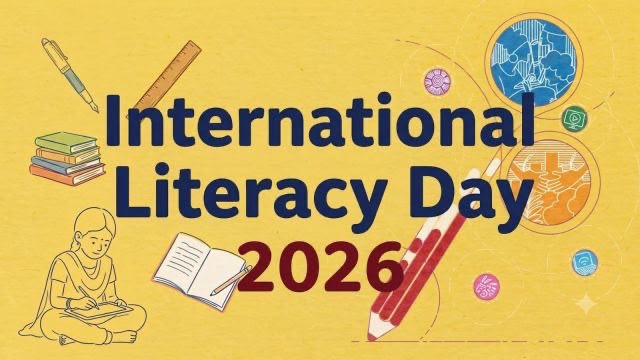
Every year on September 8, the world commemorates International Literacy Day (ILD)—a day dedicated to highlighting the transformative power of literacy and its critical role in building inclusive, peaceful, and prosperous societies.
This year’s celebration carries special significance as it marks 60 years since UNESCO established International Literacy Day in 1966.
Over the past six decades, literacy has remained at the centre of global efforts to promote education, human development, and social inclusion. It is not simply the ability to read and write; literacy provides individuals with the foundation to acquire knowledge, develop skills, exercise their rights, and participate meaningfully in society.
The 2026 theme, “Literacy for People, the Planet, and Prosperity,” provides an opportunity for governments, institutions and communities to reflect on the progress made, confront persistent and emerging challenges, and rethink literacy strategies in a rapidly changing world.
Literacy is a fundamental human right and an essential foundation for the enjoyment of many other rights and freedoms.
A literate population is better positioned to make informed decisions, access opportunities, participate in civic life, and contribute meaningfully to economic development.
Beyond reading and writing, literacy provides the foundation for acquiring broader knowledge, skills, values, attitudes, and behaviours.
It promotes inclusion and tolerance while supporting the principles of equality, non-discrimination, justice, solidarity, and respect for diversity.
In an increasingly interconnected world, literacy also strengthens people’s ability to build peaceful relationships with one another and develop a responsible relationship with the environment.
In his message marking the 60th anniversary of International Literacy Day, the Director-General of UNESCO, Khaled El-Enany, reaffirmed the importance of literacy to global development
He stated:
«“As we celebrate the 60th anniversary of International Literacy Day, we reaffirm literacy as a fundamental human right and a powerful force for transforming lives, economies, and societies.”»
The UNESCO Director-General noted that countries and development partners have made significant progress in advancing literacy over the past six decades, describing literacy as a foundation for global growth.
Yet, the continuing emergence of new challenges means that literacy efforts must evolve to meet the realities of the modern world.
In Nigeria, efforts to improve access to education, increase school completion, and expand opportunities for young people remain critical to national development.
The introduction of the Students’ Loan Scheme by President Bola Ahmed Tinubu, GCFR, represents one of the federal government’s interventions aimed at helping students overcome financial barriers that could prevent them from pursuing or completing tertiary education.
Such initiatives are important because access to education should not be determined solely by a family’s financial circumstances.
However, access must go hand in hand with quality. Producing graduates who can compete, innovate, and contribute meaningfully to national development requires investment not only in enrolment but also in teachers, infrastructure, learning materials, technology, and skills development.
In Kogi State, the government, under the leadership of Governor Ahmed Usman Ododo, has continued to prioritise education and support for students.
Tertiary students from the state studying within and outside Kogi now benefit from bursary support, providing additional assistance to families and students facing the financial demands of education.
The administration has also undertaken interventions aimed at improving the learning environment, including the provision of standard educational equipment and renovation of schools across the state.
These interventions are significant because a strong education system requires more than classrooms. It requires environments where students can learn effectively, teachers can perform their duties efficiently, and young people can develop the knowledge and skills needed to navigate an increasingly competitive world.
Despite the progress recorded, Nigeria’s education sector continues to face significant challenges.
The task ahead is therefore not merely to increase the number of children and young people in school but to ensure that every learner receives quality education capable of transforming his or her future.
Nigeria needs graduates who can think critically, solve problems, embrace technology, create opportunities, and compete successfully in a global economy.
Literacy must, therefore, remain a national priority.
As the world marks six decades of International Literacy Day, the message is clear: investing in literacy is investing in people; investing in people is investing in the future.
For Nigeria and Kogi State, the commitment must continue—not only to put children in classrooms but to ensure that they leave those classrooms equipped to build a more peaceful, productive, prosperous, and sustainable society.
LITERACY IS MORE THAN READING AND WRITING.
IT IS THE POWER TO UNDERSTAND.
THE POWER TO PARTICIPATE.
THE POWER TO CHANGE LIVES.
And ultimately, the power to transform a nation.