By Princess Funsho Sumanu
Public resources are the foundation upon which government policies and development programs are built.
How those resources are planned, managed, and utilized, therefore, matters just as much as the resources themselves. This principle places fiscal responsibility at the heart of good governance and makes accountability a shared responsibility across every institution entrusted with public funds.
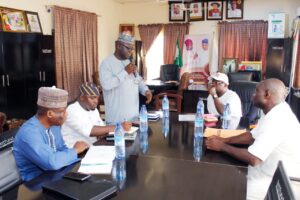
In Kogi State, the Fiscal Responsibility Commission (FRC) is strengthening this culture of accountability by taking its sensitization campaign beyond the conventional Ministries, Departments and Agencies to another critical segment of public administration: the State’s tertiary institutions.

Established to promote fiscal discipline, transparency, accountability, and prudent management of public resources, the Commission has continued to engage government institutions on the importance of responsible financial management and compliance with the provisions of the State’s Fiscal Responsibility Law.
Recognizing this strategic reality, the Kogi State Fiscal Responsibility Commission, under the leadership of Chairman Mallam Jimoh A. Muhammed, has taken its mandate directly to the campus floor.
This movement represents a structural shift in how public financial discipline is cultivated across Kogi State.
The decision to extend the sensitization exercise to tertiary institutions is significant. These institutions are not merely centers where students acquire academic qualifications; they are strategic investments in the human capital upon which the future economic, social, and technological development of Kogi State depends.
From technical education and teacher training to nursing, university education, science, technology, and research, Kogi’s tertiary institutions provide the skills, knowledge, and professional manpower required to sustain development across virtually every sector.
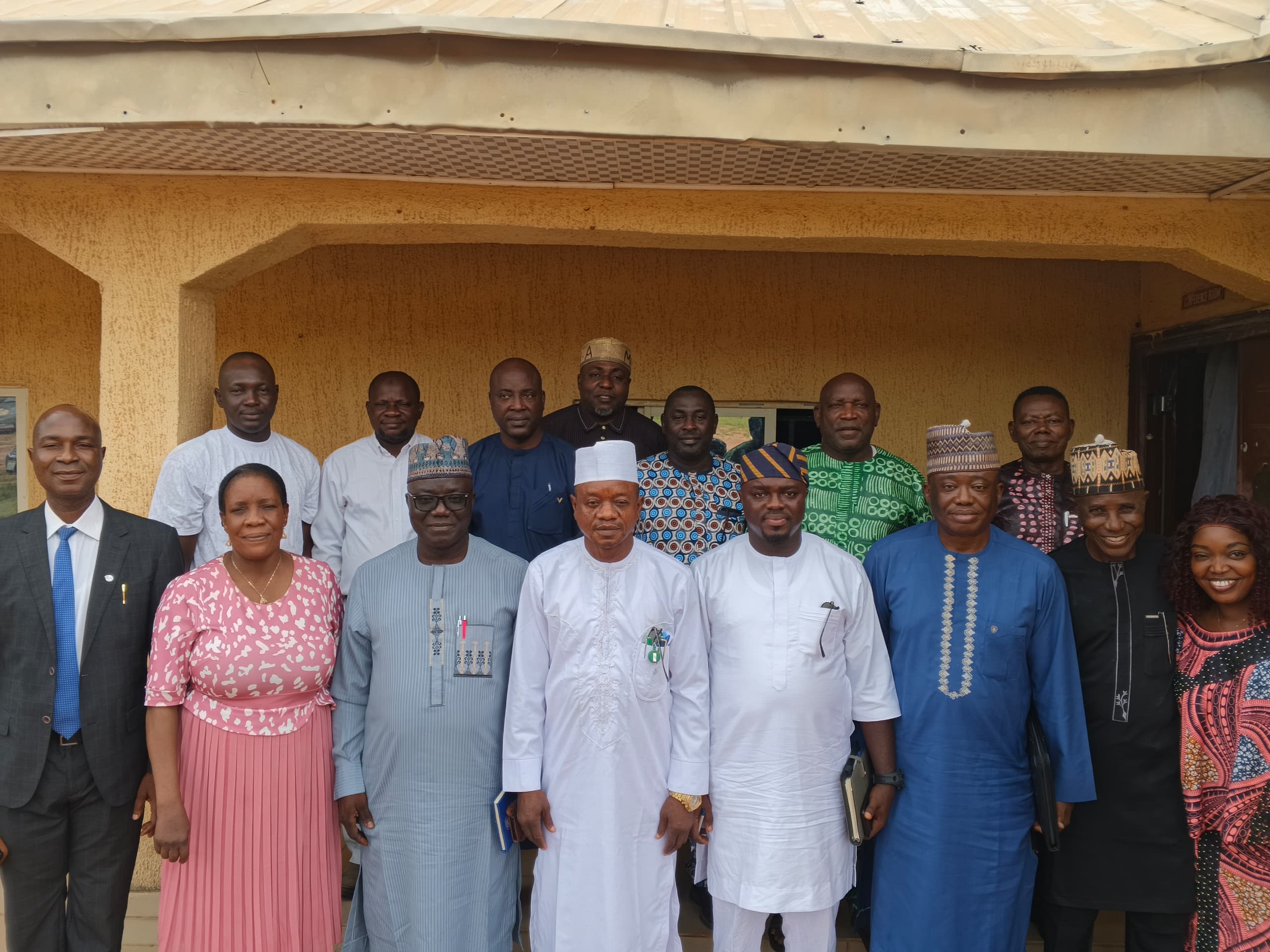
It is against this background that the FRC recently completed a sensitisation tour of seven tertiary institutions across the State, namely Kogi State Polytechnic, Lokoja; Kogi State College of Education (Technical), Mopa; Kogi State College of Nursing; Kogi State University, Kabba; Confluence University of Science and Technology (CUSTECH), Osara; Prince Abubakar Audu University (PAAU), Anyigba; and Kogi State College of Education, Ankpa.
The engagement represents a significant expansion of the Commission’s ongoing sensitisation drive. It underscores its determination to ensure that the principles of fiscal responsibility are understood and practised across all institutions managing public resources.
For tertiary institutions, the relevance of fiscal responsibility cannot be overstated.
At Kogi State Polytechnic, the sensitisation is important given the institution’s role in technical and vocational education. At a time when skills development, entrepreneurship and employability are increasingly central to economic advancement, responsible management of resources allocated to technical education becomes critical to achieving the desired results.
The same applies to Kogi State College of Education (Technical), Mopa, and Kogi State College of Education, Ankpa, whose contributions to teacher training and education development place them at an important point in the State’s human-capital development chain.
A well-trained teacher has the potential to influence hundreds of students over the course of a career. Ensuring that institutions responsible for producing such teachers are adequately resourced and that their resources are properly managed is therefore an investment that extends far beyond the institutions themselves.
The Kogi State College of Nursing also occupies a strategic place in the State’s development agenda. The institution contributes to the production of healthcare professionals whose services are indispensable to hospitals, communities and the wider health system.
The institutions therefore represent much more than government-funded establishments. They are channels through which public investment is converted into human capacity.
This makes the issue of accountability particularly important.
Every allocation to an institution represents public money. Every expenditure must therefore be guided by approved priorities, proper financial procedures, and the objective of achieving institutional and developmental outcomes.
The Commission sensitisation is aimed at strengthening that understanding among institutional management and relevant officials.
It is drawing attention to the importance of proper financial planning, adherence to approved budgets, transparency in expenditure, effective internal controls, responsible procurement, accurate financial reporting, and accountability for resources entrusted to institutions.
More importantly, the exercise seeks to encourage a culture in which fiscal responsibility becomes part of everyday institutional administration rather than an obligation remembered only when financial records are being reviewed.
This is particularly important because tertiary institutions operate in an environment of competing demands.
There are infrastructure needs, academic requirements, staff welfare, research, equipment, student services, maintenance, and other obligations competing for available resources. In such circumstances, prudent planning and prioritisation become essential.
The challenge, therefore, is not simply to secure funding but to ensure that every available resource achieves maximum value.
A properly managed allocation can translate into a functional laboratory, a modern workshop, improved learning facilities, research opportunities, better academic programmes or enhanced student welfare.
Poor management, on the other hand, can diminish the impact of even substantial government investment.
This is why the Fiscal Responsibility Commission’s accountability drive is closely connected to development.
Fiscal responsibility is not about restricting institutions from achieving their mandates. Rather, it is about ensuring that the resources available to them are used in ways that maximise their ability to fulfil those mandates.
For Kogi State, the stakes are considerable.
The State’s development aspirations depend heavily on the quality of its human capital. Teachers, nurses, engineers, scientists, technologists, entrepreneurs, administrators and other professionals are products of the education system. The stronger the institutions that train them, the stronger the foundation for sustainable development.
The FRC’s engagement with the seven tertiary institutions therefore carries a message that extends beyond compliance with the Fiscal Responsibility Law.
It is a call for institutional managers to recognise that accountability is an essential component of leadership and that responsible management of public resources is part of their contribution to the development of the State.
It is equally a reminder that the responsibility for fiscal discipline cannot be left to the Ministry of Finance, Budget and Economic Planning or the Fiscal Responsibility Commission alone.
Every public institution has a role to play.
Every officer who participates in financial decisions has a responsibility.
And every naira entrusted to a public institution carries an obligation to the citizens whose resources it represents.
The completion of the sensitisation visits to Kogi’s seven tertiary institutions therefore marks another important phase in the FRC’s expanding engagement with public institutions across the State.
From Lokoja to Mopa, Kabba to Osara, Anyigba to Ankpa, the Commission has taken its message of fiscal responsibility directly to institutions at the forefront of human-capital development.
The significance of the exercise lies not merely in the number of institutions reached, but in the culture of accountability it seeks to deepen.
As Kogi State continues to invest in education and prepare its young people for an increasingly competitive world, ensuring that those investments are responsibly managed will remain fundamental.
For the Fiscal Responsibility Commission, the objective is clear: to strengthen awareness, promote compliance, and help build public institutions where transparency, prudence, and accountability are not simply requirements of the law, but enduring principles of governance.
Ultimately, every responsible decision taken with public resources is an investment in public confidence, and every naira properly managed today strengthens the foundation upon which Kogi State’s development tomorrow will be built.