By Adegboyega Segun
In a time when leadership is often measured by promises, Governor Ahmed Usman Ododo is distinguishing himself through purposeful action. Across Kogi State, a new governance culture is taking shape, one defined by inclusion, accountability, and measurable development outcomes.
The story of Kogi is being rewritten, not in rhetoric, but in results. At the heart of this transformation is a deliberate commitment to good governance. Governor Ododo has prioritized engagement with the people, creating platforms for cross-fertilisation of ideas. The Kogi Dialogue, which he convened to discuss the future of the state, stands as a symbol of participatory governance.
Through such engagements, citizens are not just observers but contributors to policy direction. This inclusive approach has also fostered unity across ethnic, political, and social divides, strengthening the social fabric of the state.
At the same time, the administration has reinforced transparency and accountability across all government platforms, restoring public trust in governance.
Security, a critical pillar of development, has received renewed attention under this administration. By ensuring synergy among security agencies, the government has built a coordinated response to emerging threats. More importantly, it has recalibrated the security architecture through strengthened community policing, including the engagement of hunters and the regularisation of vigilante services. The deployment of technology in crime-fighting efforts has further enhanced surveillance and response capacity, contributing to a safer environment for citizens and investors alike.
Infrastructure development is also playing a central role in reshaping the state. Governor Ododo has initiated and completed several road projects across both urban and rural areas, improving connectivity and economic activity. Beyond major urban roads, the construction of township roads in each Local Government Area reflects a balanced approach to development.
In addition, the construction of an ultra-modern market to replace an aging and hazardous one underscores the administration’s commitment to protecting lives while boosting commerce. The take-off of the Kogi International Airport project further signals a bold vision to position the state as a global centre of excellence and a strategic economic hub.
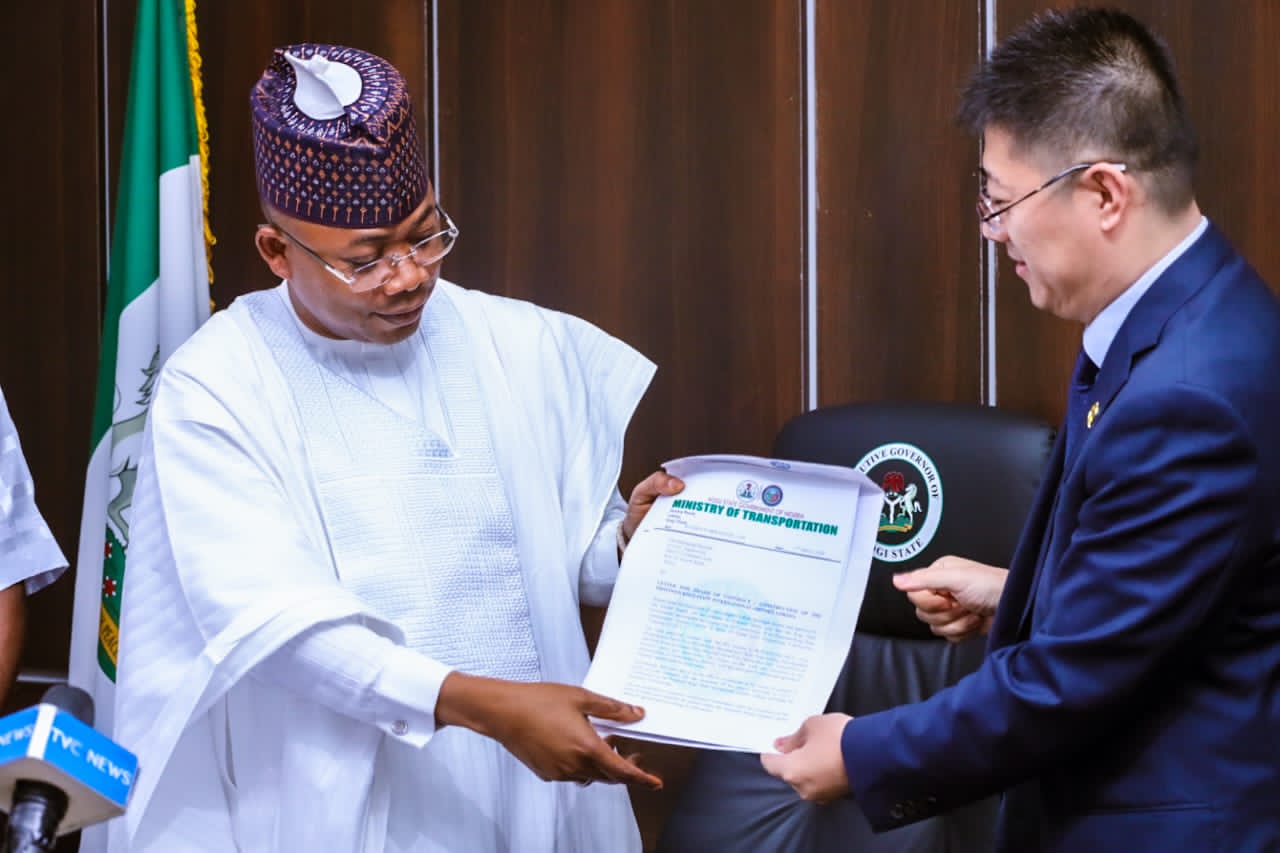
At a ceremony to award the airport projects contracts to reputable international and local contractors, the Governor explained the rationale behind the project. At the core of his vision is a Kogi that is seen by the world, a Kogi that is ready to welcome to world to expand its potentials, a Kogi that is ready to use its location profitably.
Economic indicators are beginning to reflect these efforts. The state recorded a 3.8% GDP growth in 2025, driven by agriculture, mining, and trade. Internally generated revenue has improved, as the administration continues to block leakages and enhance efficiency. At the same time, investments in agriculture, solid minerals, and infrastructure are opening new frontiers for growth and job creation.
In the education sector, the administration is making significant strides in rebuilding and repositioning institutions. Several projects in tertiary institutions have been completed, with many more ongoing. Secondary schools across the state are being rebuilt and remodelled to provide a better learning environment. Notably, the revival and accreditation of the MBBS programme at Prince Abubakar Audu University, Anyigba, marks a major milestone in medical education. The establishment of the CUSTECH Teaching Hospital further strengthens training capacity for healthcare professionals.
In addition, the payment of bursaries and scholarships to students, alongside the sustenance of free education at the basic and secondary levels, reflects a government investing in the future of its youth.
Healthcare delivery is witnessing a similar transformation. By introducing an additional N300,000 incentive for doctors working in Kogi State, the administration has made the state more attractive to medical professionals. This has significantly improved the availability of skilled personnel. The government has also strengthened medical training by securing MBBS accreditation in key institutions. At the grassroots level, over 200 Primary Healthcare Centres equipped with solar power and water have been constructed, improving access to quality healthcare. These efforts are complemented by strong public health interventions aimed at safeguarding the wellbeing of citizens.
The Ododo administration has equally demonstrated a strong commitment to workers’ welfare. Improved salary structures and better working conditions have boosted morale across the public service. In parallel, youth empowerment and employment initiatives are creating opportunities and reducing unemployment, giving young people a stake in the state’s future.
Taken together, these achievements reflect a government with a clear vision and the discipline to execute it. Governor Ahmed Usman Ododo is not merely administering the affairs of Kogi State; he is redefining its trajectory. Through inclusive governance, strategic investments, and people-centered policies, he is reshaping the story of Kogi into one of progress, stability, and shared prosperity.
Two things have helped the administration. The initiatives of President Bola Ahmed Tinubu and his bold economic reforms have made it possible for states to access more resources from the center. Also, the Governor has shown his dexterous financial management skills, touching many sectors at the same time. Executing projects and protecting the vulnerable through various intervention programs.
The emerging narrative is clear: Kogi State is on the rise, and its future is being built with intention, courage, and results.