




 By Salawu Nneka Patience
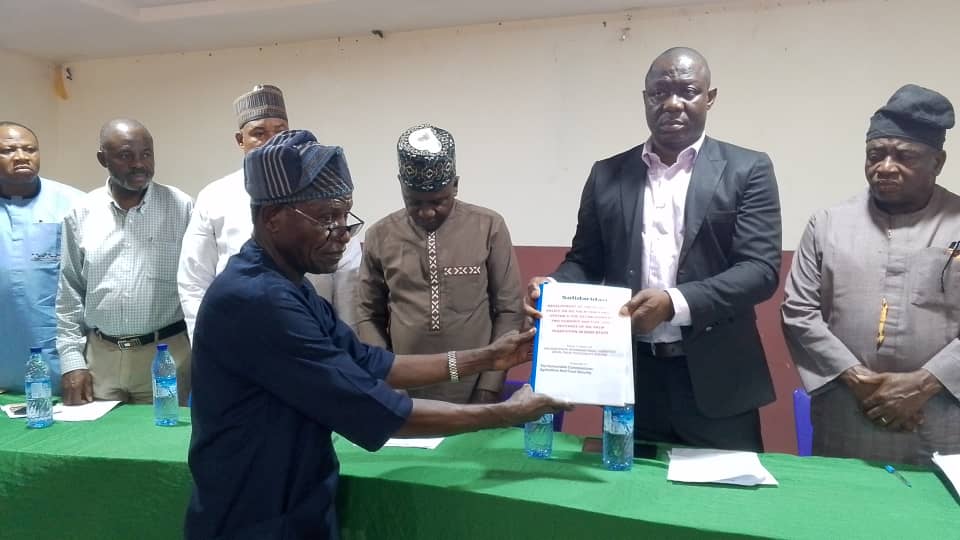
The Kogi State Ministry of Agriculture and Food Security recently hosted a landmark event marking the submission of the report of the Kogi State Interministerial Committee on Oil Palm Traceability System.
The program, attended by key stakeholders from government ministries, regulatory agencies, and industry partners, underscored the state’s commitment to improving traceability and transparency in the oil palm sector.
The event commenced with a brief introduction and solidarity remarks by Mr. Kunle Agbana, Director of Agricultural Services at the Ministry of Agriculture and Food Security. Mr. Agbana highlighted the importance of collaborative efforts among government agencies, private sector actors, and civil society organizations in achieving sustainable practices in the oil palm industry. He emphasized that the traceability initiative would enhance productivity, reduce waste, and ensure compliance with both national and international standards.
Following this, Hon. Timothy Ojomah, the Commissioner for Agriculture and Food Security, delivered the welcome address. Hon. Ojomah expressed appreciation for the dedication of all committee members and stakeholders involved in the study. He noted that the oil palm sector holds immense potential for boosting Kogi State’s agricultural economy and stressed that the traceability system would serve as a foundation for future growth, investment, and export development.
The program also featured goodwill messages from several distinguished guests, including:
Mr. Moses Dare, Permanent Secretary of the Ministry of Agriculture, reaffirmed the Ministry’s commitment to supporting initiatives that strengthen agricultural value chains.
Haruna Mohammed Jibo, Permanent Secretary of the Ministry of Environment and Ecological Management, highlighted the environmental benefits of traceable and sustainable palm oil production.
Mr Edwin Ignatius, the Area Officer of the Nigerian Shippers’ Council, underscored the importance of traceability in facilitating smooth logistics and compliance with export standards.
Hajia Sarat J. Abubakar of the Standards Organization of Nigeria, emphasized the role of quality assurance and adherence to industry benchmarks.
Mr. Akinlabi A., State Coordinator of the Nigerian Export Promotion Council, spoke on how the traceability system would enhance market access and export opportunities for Kogi State palm oil producers.
The highlight of the program was the presentation of the report by Comrade Rajan Suleiman, a CSO consultant to Solidaridad and a member of the interministerial committee. Comrade Suleiman provided an in-depth overview of the committee’s findings, recommendations, and proposed strategies for implementing an effective oil palm traceability system. He further announced that the State Interministerial Committee has proposed the establishment of two hundred and five (205) hectares of oil palm plantation in Kogi State. The report emphasized transparency, farmer engagement, and technological solutions to track production from farm to market.
The event concluded with closing remarks by Elder Samson Apeh, the Secretary of the Committee, who thanked all participants for their contributions and reiterated the committee’s commitment to supporting the implementation of the report’s recommendations.
Elder Apeh encouraged continued collaboration among stakeholders to ensure that Kogi State becomes a model for traceable and sustainable palm oil production in Nigeria.