By
Taiye Bayode
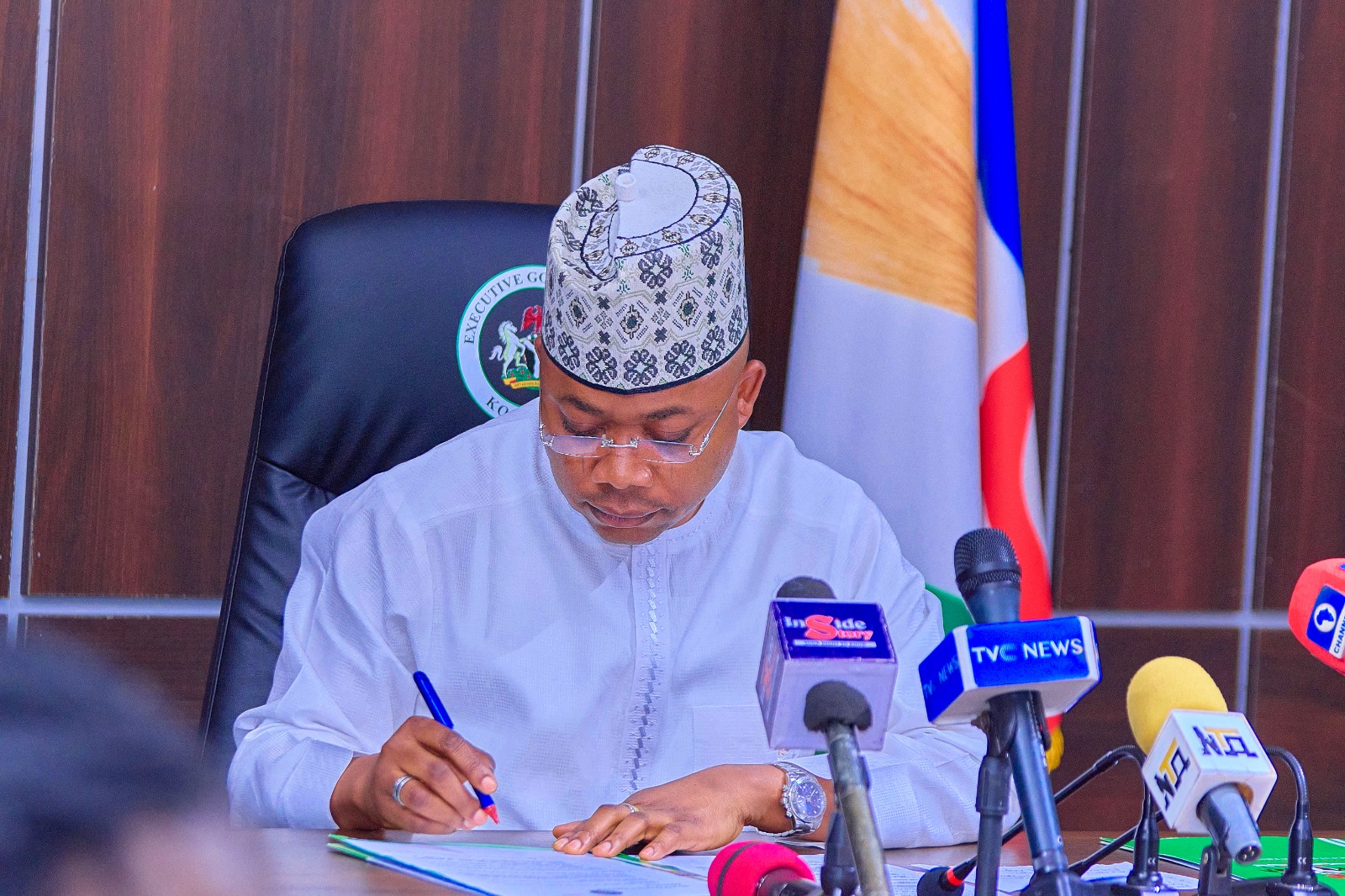
When His Excellency, Kogi State Governor, Alhaji Ahmed Usman Ododo, appended his signature to Kogi State’s 2026 Appropriation Bill, it was not merely the conclusion of a legislative process, but a declaration of prosperous intent.
The ₦820 billion “Budget of Shared Prosperity” represents a deliberate attempt to shift governance away from survival economics toward long-term value creation, inclusion, and structural transformation.
And for a state long described through the narrow lens of Civil Service dependency, the scale and philosophy of the 2026 budget signal something deeper;
It reflects an administration seeking to redefine how public finance connects to everyday life, how government spending can unlock opportunity, and how political leadership can be measured by outcomes rather than optics.
Governor Ododo’s framing of the budget as a shared prosperity tool is instructive.
Rather than presenting figures in isolation, he positions the document as a social contract; one that binds fiscal discipline to human impact.
The Governor’s emphasis on transparency and accountability is not rhetorical flourish, but a response to a national reality where public trust increasingly hinges on whether budgets translate into visible results.
And In this context, the insistence that every allocation must align strictly with the law becomes both a governance philosophy and a political safeguard, so much so, that the broader economic environment has also shaped this moment.
In fact, federal fiscal reforms under President Bola Ahmed Tinubu’s Renewed Hope Agenda have altered revenue dynamics for states, expanding fiscal space while demanding greater responsibility.
And Governor Ododo’s acknowledgement of this interplay underscores a pragmatic understanding of intergovernmental finance. Improved revenue flows are not treated as windfalls, but as opportunities to plan better, spend smarter, and reduce structural vulnerabilities.
What even gives the 2026 budget additional weight is its continuity with recent progress. The administration points to measurable gains recorded in 2025 across education, healthcare, agriculture, infrastructure, and women and youth empowerment.
These are not incidental sectors, but represent the foundations of social stability and economic mobility.
And the decision to scale these investments rather than abandon them for new headline projects suggests a governance style anchored in consolidation, not disruption for its own sake.
Yet, Governor Ododo has also made it clear that consolidation does not mean caution. His announcement of plans to develop an international cargo airport in Kogi marks one of the most ambitious infrastructure propositions in the state’s history.
Beyond its symbolism, the project reflects strategic thinking.
Kogi’s proximity to the Federal Capital Territory, its central location, and its mineral wealth give the proposal economic logic, not just political appeal.
More revealing, however, is the process behind the vision. The completion of nine months of technical designs by seven professional consulting firms, coupled with a defined procurement timeline, signals planning discipline often absent from large public projects.
Equally important is the governor’s insistence on transparency, legislative oversight, and financial prudence. By explicitly addressing workers’ welfare, state security, and risk management, the administration appears keenly aware of public skepticism around mega projects, and determined to neutralize it through structure rather than assurances.
The legislature’s role in this unfolding narrative has also been significant.
The Speaker of the Kogi State House of Assembly, Rt. Hon. Aliyu Yusuf, framed the passage of the budget and accompanying bills as part of a broader legacy of financial responsibility.
His remarks point to a quieter but critical achievement: a reduction in the state’s debt burden and improved readiness to access development financing responsibly.
In a country where sub-national debt has become a growing concern, this positioning matters.
Perhaps the most consequential aspect of the budget signing lies in the accompanying reforms.
Laws addressing multiple taxation, domesticating federal tax changes, expanding revenue following judicial pronouncements, and strengthening audit independence collectively suggest an administration intent on fixing systems, not just funding projects.
These reforms speak to investors as much as citizens, signaling predictability, accountability, and a growing intolerance for financial opacity.
At its core, the 2026 Budget of Shared Prosperity reflects Governor Ododo’s assertion that governance is not politics, but a statement that leadership should be judged not by alliances or applause, but by whether policies create value, reduce hardship, and open pathways for growth.
Whether this vision ultimately succeeds will depend on execution, consistency, and public trust.
But with this budget, the Ododo administration has clearly placed its bet on structure over sentiment, planning over populism, and prosperity that is intended to be shared, not promised.