

By
Taiye Bayode
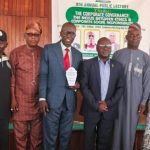
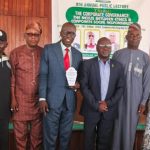
Today, the atmosphere inside the venue of the 8th Annual Public Lecture of the Chartered Institute of Personnel Management (CIPM), Lokoja, Kogi State, carried a distinct sense of transition.
The lecture, themed Corporate Governance: The Nexus Between Ethics and Corporate Social Responsibility, which held at the Kogi State Secretariat Conference Hall was more than a professional gathering, but a reflection of a civil service awakening, a rediscovery of standards, and a quiet rise in the state’s credibility within Nigeria’s professional landscape.
For years, participation of civil servants in structured human resource development programmes had fluctuated. But things are changing and the involvement of senior officials, the presence of the Institute’s national leadership, and the renewed enthusiasm from participants all pointed to a changing narrative for Kogi State.
This energy was first captured in the welcome address by Mr. Daniel Marcus Akuso, ACIPM, Chairman of the CIPM Kogi Branch, where his remarks highlighted a steady shift: more civil servants are beginning to see the value in belonging to professional bodies, and the Institute is working deliberately to increase these numbers.
Beyond individual certification, the broader goal is to transform the public service into a modern institution guided by ethics, strategy, and global HR standards. He also assured participants that the branch is committed to ensuring that all attendees of this year’s lecture are inducted by 2026 as part of its long term professional development target.
Representing the Head of Service, Dr. Elijah Adeiza Evinemi, FCA, the Permanent Secretary, Administration and Public Services, Alhaji Ahmed Idris, also reinforced this message, speaking about the state’s commitment to ensuring civil servants do not merely attend such events but actively join the Institute and participate fully in its programmes.
His remarks hinted at a long term strategy: building a public service capable of competing with the best and projecting the state’s identity on the national stage.
The high table which included other senior officials & representatives reinforced the national importance of the programme and the growing attention Kogi State is attracting within the Institute.
One of the most striking developments is the growing interest of the CIPM National Secretariat in Kogi State.
With expanding membership and the rising engagement of civil servants, there are already plans for national induction exercises to be hosted in Kogi in the coming year.
Such recognition is not accidental, but the result of years of gradual but determined investment in human capacity development, culminating in a new confidence about Kogi’s corporate identity.
It was only fitting then that the keynote lecture was delivered by Prof. John Alabi, a seasoned professor of management and leadership whose deep understanding of ethics, governance, and corporate responsibility has shaped many institutions over the years.
His lecture brought clarity to the theme. Corporate governance is not merely about administration or procedures. It is the interplay of accountability, stakeholder trust, and social responsibility.
It is the balance between institutional profit or public service effectiveness and the ethical principles that sustain society. It is the discipline of building systems that endure.
Prof. Alabi also drew attention to the implications of poor governance using global and local case studies.
His message was clear. Institutions rise when integrity and responsibility guide their operations, and they crumble when these values are ignored.
For a state seeking to build a modern civil service, this reminder was timely. Governance, ethics, and social responsibility are not abstract concepts. They are the foundation for sustainable development.
The lecture also illuminated an emerging reality. Kogi State is gradually carving out a space for itself within Nigeria’s professional community.
The active participation of civil servants in the Abuja national conference earlier in the year made a strong impression on the Institute’s leadership, and the hope is that Kogi will present an even stronger delegation of no fewer than 200 members in 2026. What once seemed ambitious is now within reach.
As the event drew to a close, one message remained consistent. The transformation of any institution begins with its people.
For Kogi State, the path toward a more ethical, responsible, and governance driven public service is being charted not through policies alone but through partnerships with professional bodies.
Last modified: December 10, 2025