By Adurodija Ebenezer
By the time the sun rises over Lokoja, the rivers have already begun their ancient conversation. The Niger glides in with the calm authority of a king; the Benue rushes toward it like a long‑lost sibling. Their meeting — a shimmering X on the map — is one of Africa’s most dramatic natural signatures. Yet for decades, the world has passed it by, unaware of the stories unfolding along its banks.
Kogi State is a place where history lingers in the air, where landscapes whisper, and where communities hold on to traditions with a quiet, stubborn pride. But beneath the poetry lies a harder truth: this is a state rich enough to transform its future, yet still waiting for the world to notice.
A Land Blessed by Geography, Burdened by Neglect
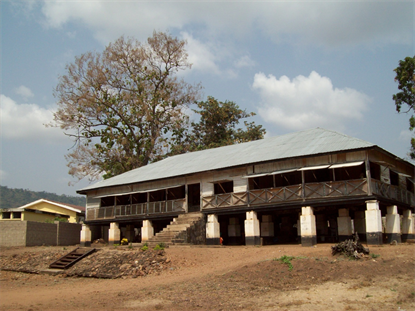
Kogi sits at Nigeria’s midpoint, a crossroads of cultures and commerce. Traders once paddled these waters with goods that shaped empires. Colonial administrators built their first headquarters here, leaving behind relics that still stand — some preserved, others crumbling under the weight of time.
But geography alone doesn’t guarantee prosperity. For years, Kogi’s tourism potential has been overshadowed by underinvestment, inconsistent policy, and a national tourism industry struggling to find its footing.
Still, the raw material is undeniable. Mount Patti rises like a sentinel above Lokoja, offering a view so sweeping it feels almost cinematic. Forest reserves hum with life. Waterfalls tumble through untouched valleys. And in villages across Igala, Ebira, and Okun lands, culture is not a performance — it is a pulse.
The People Behind the Promise
To understand Kogi’s tourism story, you have to meet the people who live it. Musa, a tour guide who has spent half his life climbing Mount Patti, speaks with the conviction of someone who has seen what others overlook. “If this mountain were in Kenya or South Africa,” he says, “there would be cable cars, lodges, photographers everywhere. But here, it’s just us and the wind.”
In Idah, craft maker Aisha arranges her woven baskets with the precision of a curator. Her grandmother taught her the patterns — spirals that mimic river currents, diamonds that echo ancestral symbols. “Tourism isn’t just business,” she says. “It’s how our culture survives.”
Her words reveal the emotional stakes: tourism is not merely an economic opportunity; it is a lifeline for heritage.
The Beauty That Doesn’t Advertise Itself
Kogi’s landscapes are not loud. They don’t scream for attention like Victoria Falls or the Sahara dunes. Instead, they invite you in quietly — a soft‑spoken beauty that rewards those who linger.
In the forests near Kabba, sunlight filters through ancient trees, illuminating footpaths used by hunters and storytellers for generations. At the confluence, fishermen cast their nets with a rhythm that feels almost ceremonial. In Okene, masquerades whirl through dusty streets, their movements both fierce and graceful.
These are scenes that could anchor documentaries, travel features, or global tourism campaigns. Yet they remain largely unseen.
A Government Trying to Rewrite the Narrative
In recent years, Kogi’s government has begun to push tourism as a pillar of economic growth. Roads are being rebuilt. Partnerships are being negotiated. Investors are being courted with tax incentives and land access.
But the investigative question remains: Will this momentum last?
Nigeria’s tourism sector has seen many promising beginnings fade into bureaucratic inertia. Kogi’s challenge is not just to attract investment, but to sustain it — to build a system where communities benefit, environments are protected, and visitors feel safe.
Experts warn that without consistent policy, transparent governance, and community inclusion, the state risks repeating the mistakes of other regions where tourism boomed briefly and collapsed just as fast.
The Vision That Could Change Everything
If Kogi gets it right, the possibilities are vast:
Cable cars gliding up Mount Patti
Waterfront resorts along the confluence
Annual cultural festivals drawing global crowds
Eco‑lodges tucked into forest reserves
River cruises showcasing the state’s natural drama
Craft markets buzzing with artisans like Aisha
Digital storytelling hubs capturing Kogi’s heritage
These aren’t fantasies — they are feasible projects waiting for champions.
The Human Stakes of a Tourism Revolution
For elders like Baba Ojo, tourism is about dignity. “When people visit your home,” he says, “they remind you that what you have is valuable.”
For young people, it’s about opportunity — a chance to build careers without leaving home.
For artisans, it’s about survival — keeping traditions alive in a world that forgets too quickly.
And for the state itself, it’s about rewriting its place in Nigeria’s story.
A State on the Edge of Discovery
As evening falls over the confluence, the rivers glow gold, reflecting a sky streaked with pink and violet. It is a sight that could grace postcards, travel magazines, or tourism billboards.
But for now, it belongs mostly to the people who live here — people who know that beauty alone is not enough. It must be seen, valued, and protected.
Kogi is ready.
Its stories are ready.
Its landscapes are ready.